Our 2 Week Road Trip Out West Itineraries for an Epic Journey
Did you know the American Southwest contains over 60% of the country’s national parks? This vast region offers more than just scenery—it’s a living postcard of crimson cliffs, winding desert highways, and cultures older than the roads themselves. We spent fourteen days exploring its magic in a Jucy camper van, chasing sunsets from California’s coasts to Arizona’s canyon country.
Our journey covered four states packed with contrasts. Think Joshua Tree’s spiky silhouettes against Nevada’s neon glow, or Utah’s Arches National Park blending with Arizona’s Grand Canyon. Every mile felt like stepping into a classic Western film—minus the horseback travel. We balanced iconic stops with hidden gems, proving you can experience the West’s soul without rushing.
This guide isn’t just about routes. It’s about weaving Native American history into canyon hikes, finding secret viewpoints, and mastering the art of van life. We’ll show you how to savor local flavors, avoid crowds, and turn long drives into part of the adventure. Ready to trade routine for red rocks?
Key Takeaways
- Explore four states in one seamless journey: California, Nevada, Utah, and Arizona
- Discover the perfect mix of national parks, cultural sites, and quirky roadside stops
- Learn time-saving strategies to maximize experiences without burnout
- Get insider tips on camper van travel and lesser-known attractions
- Create lifelong memories through carefully curated daily adventures
Planning Our Epic Road Trip Out West
Crafting the perfect Southwest adventure required equal parts strategy and spontaneity. We discovered that grouping destinations by proximity slashed drive times while boosting exploration hours. Smart clustering let us experience three iconic parks in two days without feeling rushed.
Choosing Our Route and Stops
We plotted our course using a “hub and spoke” method. Base camps near multiple attractions minimized packing/unpacking. For example, staying near Zion National Park gave easy access to Bryce Canyon and Grand Staircase-Escalante. This approach kept driving segments under three hours—perfect for sunrise departures and midday arrivals.
Budgeting and Reservation Tips
Book lodgings six months early, especially near popular parks. We mixed splurge-worthy hotels with budget-friendly campgrounds—snagging a $35/night site near Grand Canyon saved funds for a Monument Valley jeep tour. Pro tip: Set booking reminders for recreation.gov dates—they disappear faster than desert rain.
Must-See Attractions on Our Journey
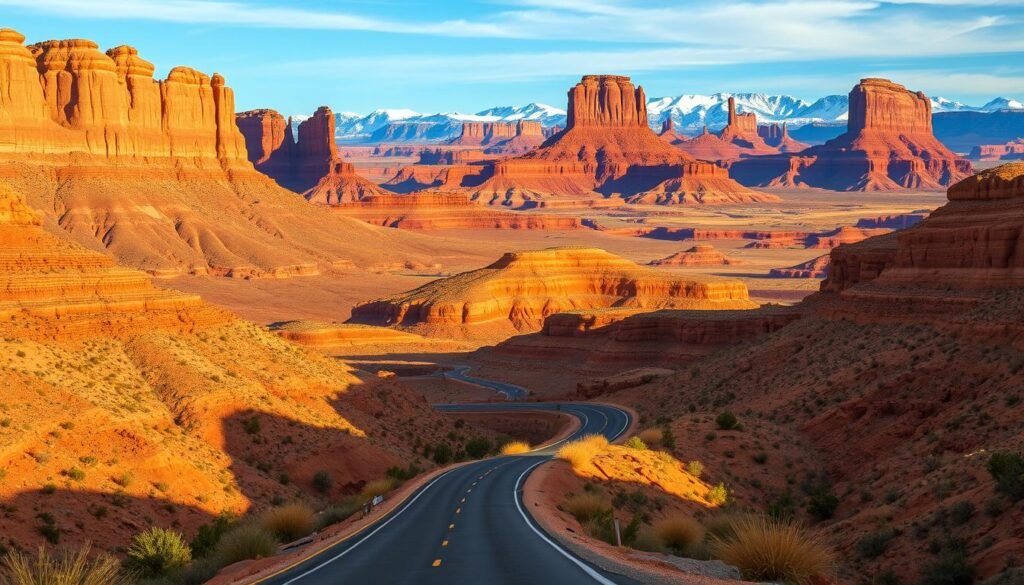
The Southwest unfolds like a geological storybook, each chapter revealing earth’s artistic mastery. We discovered that timing visits for golden hour transforms ordinary rock formations into glowing sculptures. Morning light at Bryce Canyon makes hoodoos blush, while sunset at Horseshoe Bend turns the Colorado River liquid gold.
National Parks and Scenic Drives
Utah’s Mighty 5 became our outdoor playground. Arches National Park surprised us with over 2,000 natural stone arches—Delicate Arch’s sunset hike felt like walking into a postcard. Zion’s Narrows wading adventure cooled us down, while Capitol Reef’s orchards offered sweet breaks between canyon explorations.
| Park | Must-See | Best Time | Activity |
|---|---|---|---|
| Arches | Delicate Arch | Spring | 3-mile hike |
| Zion | The Narrows | Fall | River walk |
| Bryce | Sunrise Point | Summer | Viewpoints |
| Grand Canyon | South Rim | Spring/Fall | Rim Trail |
Iconic Landmarks and Natural Wonders
Monument Valley’s Mittens buttes made us feel ant-sized. A local guide shared Navajo stories while our jeep kicked up red dust. Antelope Canyon’s light beams danced across sandstone walls—book early for midday tours when sunlight pierces the slots.
“These parks aren’t just destinations—they’re conversations with time.”
We balanced famous spots with hidden treasures. Goblin Valley’s mushroom-shaped stones became our private playground, while Dead Horse Point’s 2,000-foot cliffs stole our breath. Every curve brought new perspectives on nature’s endless creativity.
Starting Our Adventure in Los Angeles
Our journey began where palm trees meet the Pacific, in the ever-buzzing heart of Southern California. Los Angeles serves as the perfect launchpad, blending urban energy with coastal charm before the open road calls. We allocated two days here—enough to taste the city’s contrasts without delaying desert magic.
Coastal Charms and Urban Pulse
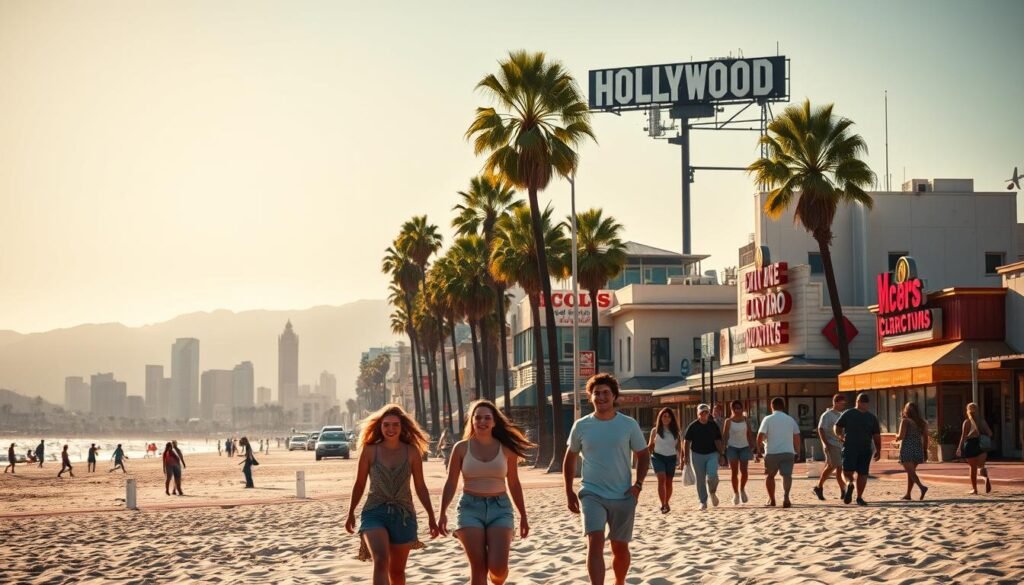
Santa Monica’s pier gave us our first taste of West Coast sunsets. The crashing waves and carnival lights created a scene straight from California postcards. Venice Beach surprised us with muscle-bound athletes pumping iron at outdoor gyms, while street artists transformed boardwalk walls into living galleries.
Malibu’s secret coves offered quieter moments. We found a cliffside spot where dolphins breached at golden hour—no tour buses in sight. Pro tip: Arrive before 3 PM to snag parking at El Matador Beach’s sandstone arches.
The Hollywood Hills hike tested us more than expected. “This view better cure sprained ankles,” Kyle joked, limping up the trail. Spoiler: The panorama of endless cityscape framed by the iconic sign made every step worthwhile.
We ended our urban immersion cruising Sunset Boulevard. Convertibles zipped past retro diners as palm shadows stretched across the asphalt. These hours in LA’s vibrant neighborhoods set the stage perfectly—reminding us that adventure lives in cities and canyons alike.
Transforming from Surf to Desert: LA to Palm Springs
Leaving the coastal buzz of Los Angeles, our wheels pointed east toward desert horizons. The 2.5-hour journey unfolded like a time-lapse video—palm-lined boulevards giving way to rocky canyons and sprawling wind farms. Interstate 10 became our runway into a new ecosystem.
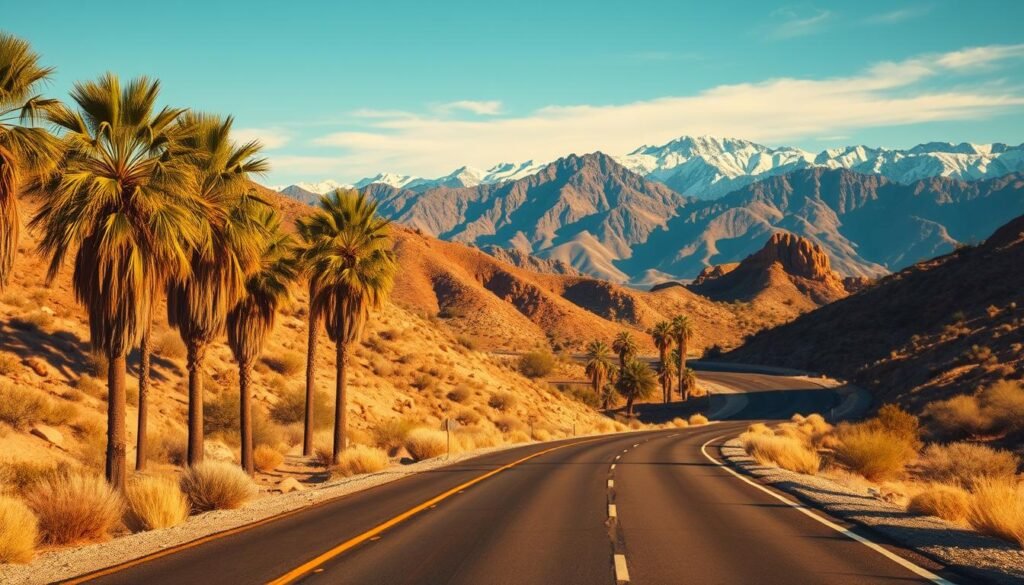
We traded our camper van for a night at the Saguaro Hotel, a technicolor oasis exploding with mid-century charm. Its pool area became our instant decompression chamber, surrounded by towering palms and vibrant lounge chairs that begged for sunset cocktails.
Dawn revealed why Kyle declared Palm Springs his future retirement HQ. Downtown’s retro-modern boutiques and coffee shops hummed with laid-back energy. We lingered over espresso flights at a local café, soaking in views of the San Jacinto Mountains.
The shift from beach towns to desert chic happened faster than our tans developed. By noon, we were back on the road—sun-kissed and ready for deeper adventures. This seamless transition proved how quickly California’s landscapes rewrite their rules.
Navigating the Desert: Palm Springs to Death Valley
Morning light revealed Palm Springs’ golf courses fading into desert scrub as we began our northward push. A forgotten toiletry bag forced a quick Santa Monica detour—a 90-minute pit stop that somehow felt worth it for toothpaste and canyon views. The real magic began when Highway 127 unfolded like a sun-bleached ribbon through the Mojave.
Golden Hour on Shifting Sands
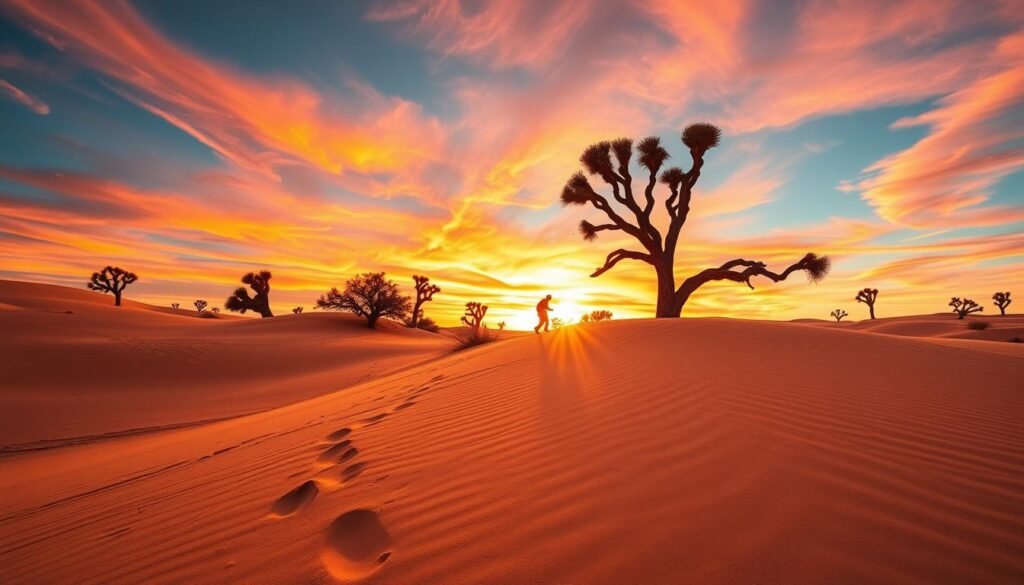
We timed our 5-hour drive perfectly, arriving as the Mesquite Sand Dunes blushed under late-day sun. Photographers’ tripods dotted the parking area, but most visitors clustered within 500 feet of their cars. Pro tip: Walk 15 minutes northwest to find untouched dunes where shadows carve deeper drama.
| Activity | Distance | Best Time | Summer Temp |
|---|---|---|---|
| Dune photography | 0.25 miles | Sunset | 85°F |
| Summit hike | 1.4 miles | Dawn | 72°F |
| Short exploration | 0.5 miles | Golden hour | 95°F |
The 1.4-mile trek to Star Dune tested our calves in sinking sand, but delivered 360° views of rippled earth. We learned why rangers warn against midday summer visits—our thermometer hit 103°F at 3 PM. Yet at dusk, the cooled grains slipped through our fingers like powdered gold.
This desert leg taught us balance: manicured resorts versus raw wilderness, planned itineraries versus spontaneous detours. Each mile deepened our awe for California’s extremes.
Embracing the Heat: Death Valley and Las Vegas Experiences
Dawn in Death Valley feels like stepping onto another planet. Our headlamps carved paths through cool desert air as we walked toward Badwater Basin’s salt flats—North America’s lowest point at 282 feet below sea level. Cracked earth gave way to a crystalline wonderland under pink-streaked skies.
Sunrise Hikes and Iconic Vegas Attractions
The 2-mile hike began in muddy tracks but led to pristine salt polygons glowing in magic hour light. We learned why rangers insist on sunrise starts—by 9 AM, temperatures soared past 100°F. Pro tip: Pack water shoes for salty puddles and shoot photos facing west for mountain reflections.
Artist’s Palette surprised us next. This 9-mile scenic drive revealed mineral-streaked slopes in mint greens and rust reds—like driving through a spilled paintbox. We lingered at pullouts, imagining ancient volcanic explosions creating this natural gallery.
Four hours later, neon lights welcomed us to Las Vegas. Checking into The Bellagio felt surreal after days of desert camping. Their fountains danced as we toasted with frozen cocktails—proof that epic journeys thrive on contrasts. From salt flats to slot machines, this leg reminded us why America’s Southwest never plays by predictable rules.


0 Comments