
Can a single visit truly capture a city’s soul? You arrive ready to balance famous sites and everyday scenes, and this guide helps you do just that.
The map of the eternal city is compact: Vatican City to the west, Termini to the east, Villa Borghese up north and the Colosseum down south. Each day focuses on a neighborhood so your trip flows without frantic crossing of the map.
You’ll weave headline history with local life—ancient forums, baroque piazzas, sparkling fountains, and shady gardens—so your experience feels rich, not rushed.
Plan smart timing, choose a central base, and add quiet courtyards and gelato walks to your schedule. That way you spend more time absorbing the heart of the city and less time waiting in queues.
Key Takeaways
- Use a neighborhood-by-neighborhood plan to keep logistics simple.
- Mix big sights with street-level moments for a fuller experience.
- Time visits early or late to avoid crowds and heat.
- Base yourself near the central core to cut transit time.
- Include gardens and quiet squares to recharge between tours.
How to Use This How-To Guide for Your Week in the Eternal City
Treat each day as a curated route that mixes major sites with quiet corners and coffee breaks. This plan helps you move smoothly from morning starts to relaxed evenings so your visit feels paced and pleasurable.
What you’ll cover each day
- Start early: churches often open around 7:00 a.m., so use the early morning to slip into a silent church and see art before the crowds.
- Balance a big anchor—Vatican City, a Colosseum-area tour, or Borghese—with short neighborhood strolls and café breaks.
- Reserve midday for timed entries to museums and afternoon for gardens to rest and recharge.
Map your days
Most sights cluster between Vatican City and Termini, with Villa Borghese to the north and the Roman Forum toward the south. Plan a route that links Piazza del Popolo up to Trinità dei Monti, then wander toward the Forum for an evening passeggiata.
- Use this guide as a day-by-day compass: morning momentum, midday breaks, and calm evenings.
- Prebook major timed entries, but stay flexible for spontaneous strolls through gardens and piazzas.
Best Time to Visit and Crowd-Savvy Strategy
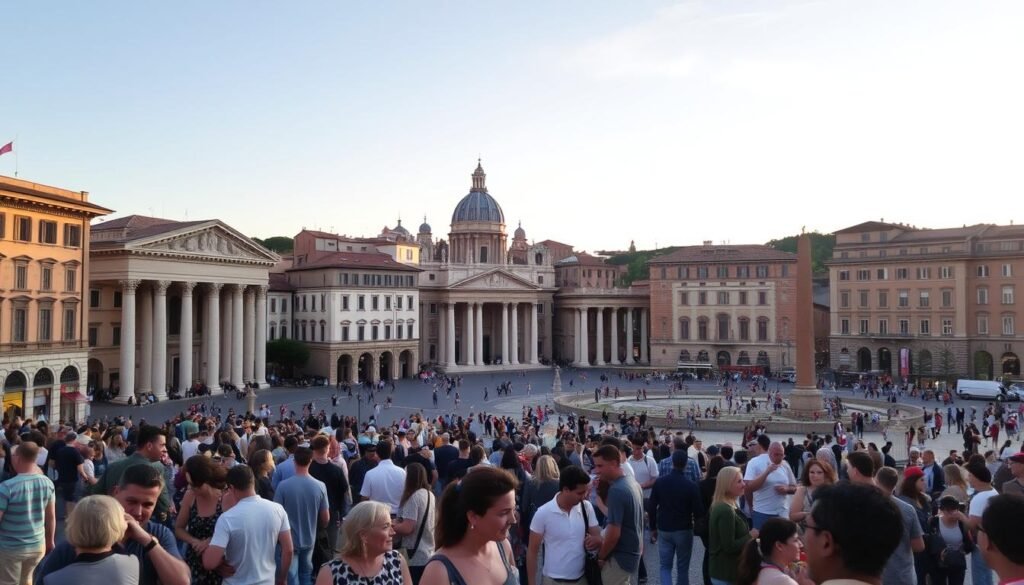
Timing your trip smartly unlocks more relaxed mornings and cooler, luminous evenings.
Aim for March, April, October, or early November when temperatures are pleasant and visitors thin. These months cut long wait times and let you enjoy open-air piazzas without the crush.
In peak summer, heat and long queues change how you should plan. Start with early morning stops at churches that open around 7:00 a.m. That quiet window often lets you see art before ticketed sites draw lines.
Save big outdoor sites for late afternoon or schedule evening passeggiate. Nighttime views from Capitoline terraces and lit monuments feel calmer and cooler.
| Month | Crowd Level | Heat | Strategy |
|---|---|---|---|
| March–April | Low–Moderate | Mild | Early tickets, park strolls |
| October–early Nov | Low | Cool | Evening views, fewer lines |
| July–Aug | High | Hot | Book ahead, plan shady breaks |
| All seasons | Variable | Variable | Carry refillable bottle; check hours |
Your visit improves with a little timing strategy. You’ll skip the worst lines, save time, and enjoy a more relaxed experience across the city.
Passes, Tickets, and Skip-the-Line Essentials
A few well-chosen reservations and a city pass will keep your itinerary moving smoothly.
The Roma Pass (~€36 for three days) covers public transport and two free sights. It also gives discounts after the freebies. The real benefit is skipping ticket-buying lines at many popular spots.
You can pick up the pass across the city at tourist info points, major stations, or tobacco shops. That makes it easy to activate it when you want and avoid delivery hassles.
Must-book entries
- Pre-book the Vatican Museums to bypass the long queue and move straight toward the Sistine Chapel.
- Reserve a timed slot for the Borghese Gallery; timed entry protects your schedule and creates a calmer experience with the collection.
- Use the Roma Pass to skip ticket windows and link the Colosseum with the Roman Forum and nearby transport for a smoother day.
Combine a pass for flexibility with a few targeted reservations where lines form. Keep digital confirmations ready and arrive 10–15 minutes early to clear security. Small planning on tickets can save you more than an hour per stop and improve every visit.
Staying Aware: Safety Tips and Common Scams to Avoid
A few small habits will protect your belongings and let you enjoy the scene without worry.
Keep essentials minimal and close. Tuck your wallet and phone into front pockets and lock zippers. If you carry a backpack, tuck the straps under your seat or loop them around your leg so quick grabs are harder.
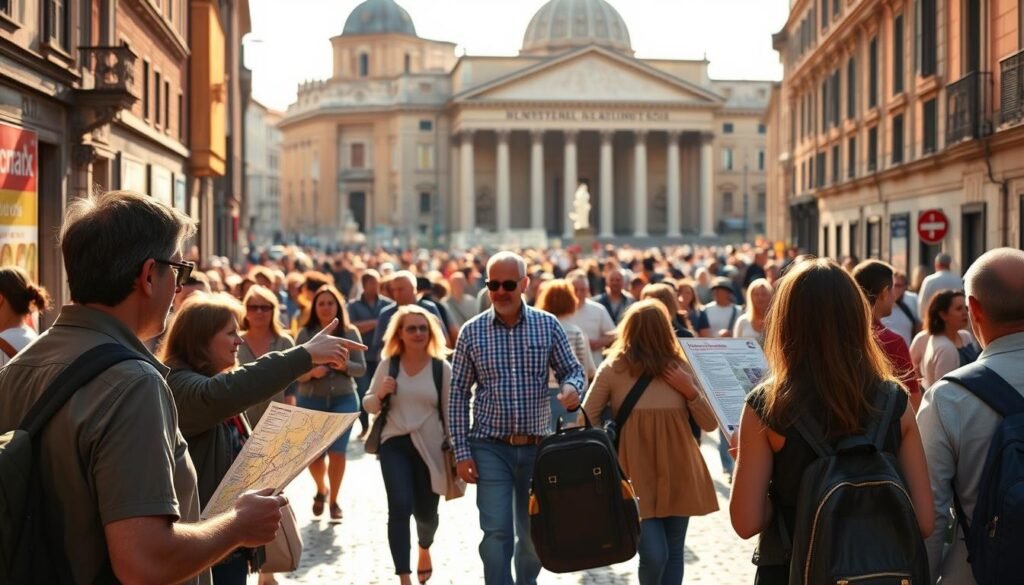
Pickpockets on buses 40/64, Termini, and the metro
Pickpockets work crowded spots like Termini and on buses #40 and #64. Expect sudden moves near doors where thieves make quick exits. On busy streets and transit, keep a hand on your bag and avoid showing maps or valuables.
Taxis, ATMs, “free” souvenirs, and fake officials
- Only use white taxis labeled “Roma Capitale.” Confirm the meter resets to the €3 base fare and note the airport-to-city cap (about €48).
- Use ATMs inside banks or in well-lit areas. Tug on the card slot first and watch for plastic overlays.
- Politely refuse “free” bracelets or trinkets — if something is handed to you it can turn into an aggressive sale.
- If approached by someone claiming to be an official, never hand over cash or cards; ask to go to the nearest police station to resolve the issue.
Leave backup passports and spare cards in your hotel safe and carry only what you need for the day. With a few small precautions, your stay will stay safe and your trip more enjoyable for all visitors.
Where to Stay: Termini, Pantheon Neighborhood, and Trastevere
Where you base yourself shapes how much of the city you soak up each day and how easily you return to rest.
Quiet, well-connected bases for a restful stay.
Termini offers modern hotels and fast connections by train, bus, and taxi. Pick Termini if you want a frictionless base for early departures or late arrivals.
The Pantheon neighborhood wraps you in narrow streets and lantern-lit corners. From here you can walk to Navona, fountains, and countless small churches.
Trastevere feels village-like with cobblestones, independent restaurants, and old churches around every turn. It buzzes at night but has quiet backstreets for sleep.
Convent stays near Termini and the Vatican for peaceful nights
Consider convent guesthouses for budget-friendly, serene stays. Suore di Santa Elisabetta near Termini and Casa per Ferie Santa Maria Alle Fornaci by Vatican City are clean and quiet. You’ll be close to St. Peter Basilica yet dodge daytime crowds at night.
- Stay near the heart to cut commute time and linger over food and gelato.
- Ask for courtyard rooms to reduce street noise and confirm air conditioning for summer comfort.
- Plan your first evening as a gentle neighborhood wander to learn the streets and local life.
Ancient Rome Day: Colosseum, Roman Forum, and Palatine Hill
Start your ancient-city day before crowds form, when churches and cobbles feel almost private. Move first to San Pietro in Vincoli to see Michelangelo’s Moses and the chains of St. Peter in a quiet morning light.
Early morning at San Pietro in Vincoli
Arrive early so you can savor the sculpture without rush. The chapel’s hush makes the masterpiece feel close and personal.
Colosseum tips and lower-level tours
The Colosseum opens around 8:30. Lines are longest in the morning, but passes skip ticket queues. Book a guided lower-level tour separately if you want the underground arena and deeper context on architecture.
Decoding the roman forum ruins
Bring a good audioguide and a map. The roman forum clicks into place when you trace temples, senate sites, and triumphal arches. Pause at the Arch of Titus to study the sculptures that record the 70 A.D. Jewish Revolt.
Palatine Hill vistas and a restful detour
Climb Palatine Hill for sweeping views over the Circus Maximus and imperial ruins. Then detour to the Baths of Caracalla for quieter, grand ruins that offer a restful contrast.
Finish via Trajan’s Markets and Via del Corso
Loop back past Trajan’s Markets and Trajan’s Column to read imperial reliefs. End the day with a relaxed stroll along Via del Corso, where the street mixes modern life and deep history.
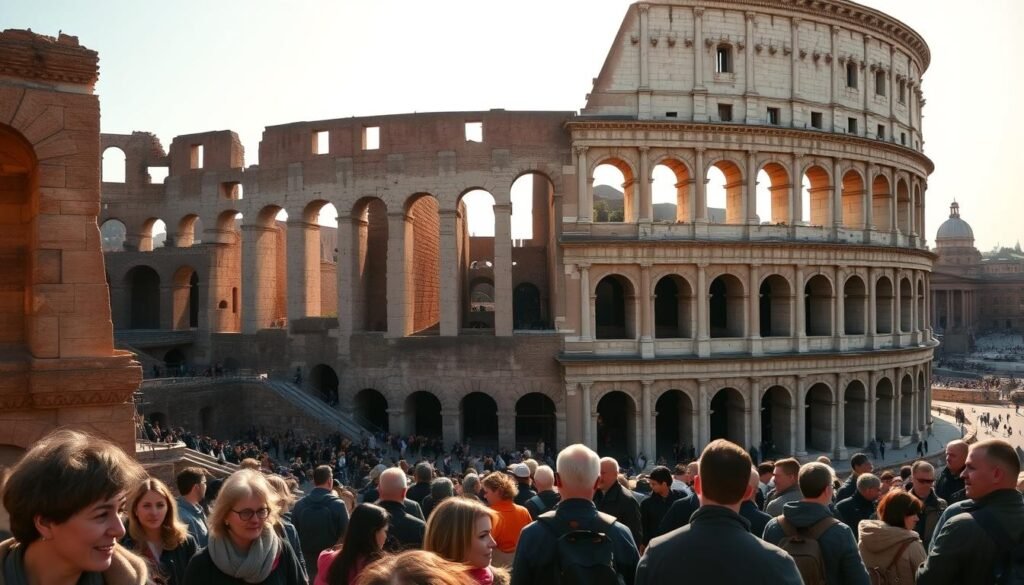
One Week in Rome: Ancient Wonders & Modern Charms
Lay out your seven days as a gentle rhythm: big sights, slow breaks, and surprise detours. This approach keeps the pace friendly and gives you room to savor each experience without rushing.
Your day-by-day plan at a glance
Scan the whole week so each day pairs a marquee sight with lighter walks and scenic pauses across the city. Expect an arc from arenas to papal palaces, then on to piazzas, gardens, and museums that showcase layered art.
- Start by mapping anchors: Colosseum/roman forum/Palatine, Vatican Museums and St. Peter’s, and a Borghese day for views and collection time.
- Build flexibility into your time: swap a heavy morning for a gallery day if your legs need rest or the weather shifts.
- Keep a couple of floating hours for spontaneous finds—side streets, café terraces, or small viewpoints you stumble upon.
- If crowds spike, pivot: take an early church, loop a park path, then re-enter a major sight with a timed entry later.
- Plan one full day for the roman forum and nearby ruins, and reserve a separate day for the Vatican highlights.
- Aim for a golden-hour photo stop daily; the views change the mood of the same stones you saw under midday sun.
How to flex the itinerary based on your pace and interests
Treat this outline as a framework rather than a script. Give yourself permission to linger in a piazza or extend a garden detour if the moment feels right.
With a loose plan, your visit finds its heart: the balance between scheduled highlights and small, unexpected joys that make the experience yours.
Vatican City Day: St. Peter’s Basilica, Vatican Museums, and Sistine Chapel
Begin your Vatican day beside the Tiber, where Castel Sant’Angelo sets a dramatic prologue.
Castel Sant’Angelo and papal passage lore
Start at Castel Sant’Angelo to feel the fortress scale and riverside views. The building links to St. Peter via the fortified papal passage. Pope Clement VII famously fled here in 1527, a moment that reads like living history.
Vatican Museums highlights
Pre-book the Vatican Museums to skip long lines and move at your own pace. Don’t miss the Raphael Rooms and their painterly dialogue with classical themes.
The Egyptian collection provides a calm contrast and surprising treasures that broaden the museum story. End the route in the Sistine Chapel and take time to read the ceiling narrative. The frescoes by Michelangelo remain the day’s high point for art lovers.
St. Peter’s Basilica, dome climb, and views
Enter St. Peter’s Basilica to see Michelangelo’s Pietà up close. The basilica opens daily 7:00–19:00; plan around those hours to avoid the busiest checkpoints.
Climb the dome for sweeping views that place the whole city in context. Circle the nave and side chapels slowly—each corner reveals another layer of art and faith.
| Spot | Why go | Tip |
|---|---|---|
| Castel Sant’Angelo | Papal lore, riverside views | Start early to enjoy quieter terraces |
| Vatican Museums | Raphael Rooms, Egyptian rooms | Pre-book timed entry |
| Sistine Chapel | Michelangelo frescoes | Follow flow, pause under the ceiling |
| St. Peter’s Basilica | Pietà, dome climb | Dress for a church; climb for panorama |
Baroque to Renaissance: Spanish Steps, Trevi Fountain, and Villa Borghese
This route pairs theatrical Baroque steps with a peaceful gallery and park to round out your cultural day.
Begin at Piazza di Spagna and climb toward the French church of trinità dei monti. The stairway gives you that classic city panorama and a moment to breathe before sightseeing.
Walk down to the Trevi Fountain as evening approaches. The stone warms in late light and crowds slip away. Toss a coin the traditional way: eyes closed, right hand over left shoulder, if you want to return.
Book a timed visit to Galleria Borghese to see masterpieces up close. Seek Bernini’s Apollo and Daphne and Caravaggio’s David with Goliath’s Head. The collection balances sculpture and painting so you feel the conversation between Renaissance and Baroque art.
After the gallery, drift through the Villa Borghese gardens. Head to the Pincio Terrace for sweeping views across domes to st. peter and Piazza del Popolo. This blend of fountains, sculptures, and architecture makes the whole day feel composed yet relaxed.
Keep water and a small snack handy; plan the later gallery slot if you prefer quieter evening light and softer crowds.
| Spot | Highlight | Best Time |
|---|---|---|
| Piazza di Spagna | Trinità dei Monti view, staircases | Morning for photos |
| Trevi Fountain | Tradition: toss a coin, glowing stone | Evening for fewer crowds |
| Galleria Borghese | Bernini, Caravaggio, Titian | Prebooked time slots |
| Villa Borghese / Pincio | Gardens and skyline views to St. Peter’s dome | Sunset for panorama |
Tiber-side Icons: Ponte & Castel Sant’Angelo, Piazza Navona, and the Pantheon
Follow the Tiber and you’ll move from angel-topped bridges to baroque fountains and a perfect domed temple. This compact route sits at the heart of historic streets and invites a relaxed, discovery-driven visit.
Bernini’s angels and the fortress museum
Cross Ponte Sant’Angelo slowly to admire Bernini’s angel sculptures and how they frame Castel Sant’Angelo. The fortress now houses a museum with layered history and strong riverside views.
Piazza Navona and the Fontana dei Quattro Fiumi
Piazza Navona was once a stadium; it now stages three fountains. Spend extra minutes at the Fontana dei Quattro Fiumi to read Bernini’s river allegories beneath the 16-meter obelisk.
Pantheon: dome, oculus, and Raphael
Step into the Pantheon to feel perfect proportions. Light pours through the 9-meter oculus and the marble interior guides your gaze up to the 43-meter dome. Raphael’s tomb sits quietly within the space.
Doria Pamphilj Gallery on Via del Corso
Slip into the Doria Pamphilj Gallery for palazzo-style art immersion. The collection offers intimate rooms where paintings and sculptures breathe in a family’s grand apartment.
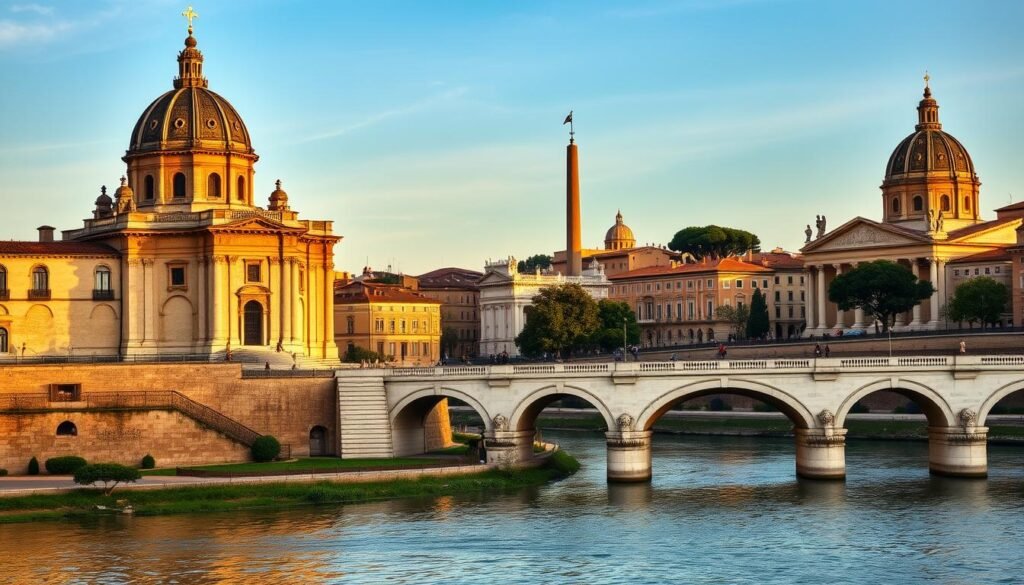
“Look up—the facades and cornices tell as much of the story as the headline monuments.”
| Spot | Highlight | Tip |
|---|---|---|
| Ponte Sant’Angelo | Bernini angels, river framing | Cross slowly for photos and details |
| Piazza Navona | Baroque fountains, stadium origins | Visit late afternoon for softer light |
| Pantheon | Oculus, marble, Raphael’s tomb | Stand center to feel the dome’s scale |
| Doria Pamphilj Gallery | Palazzo collection, quiet galleries | Short visit fits well between cafés and restaurants |
- Duck down side lanes to avoid crowds and find better sightlines.
- Pause for espresso at small cafés tucked between monuments.
- End with a slow loop back along the Tiber to catch evening reflections.
Capitoline Hill Focus: Capitoline Museums or Trajan’s Markets
A short climb brings you to a terraced square redesigned by Michelangelo, where the past meets sweeping views. This spot feels intimate yet grand, a perfect pause on a light day of wandering.
Piazza del Campidoglio organizes the hill into a neat urban stage. Walk the piazza to see Michelangelo’s sense of scale and how the paving and façades frame the city below.
Piazza del Campidoglio by Michelangelo and night views over the Forum
The piazza itself rewards a slow stroll. As evening falls, step to the terrace behind the square for free, magical views over the Forum’s ruins. The light at dusk softens stone and makes the panorama feel cinematic.
From Marcus Aurelius to Caravaggio: what to see inside
Inside the Capitoline Museums you’ll find a tight survey of Roman sculptures and later paintings. Seek the equestrian statue of Marcus Aurelius and compare it to nearby marble busts to trace the evolution of portraiture.
- Look for Caravaggio’s canvases; his dramatic light marks a turning point for European art and frescoes elsewhere in the complex.
- If galleries feel full, choose Trajan’s Markets for an architectural dive into ancient urban planning instead.
- Wander smaller rooms: the layout rewards curiosity and links pieces across centuries, helping the history snap into focus.
“As dusk falls, the interplay of stone and light around the piazza becomes a show in itself.”
Trastevere Evenings and Skyline Views
As evening falls, cross the river and let Trastevere’s narrow lanes guide you toward casual tables and lively bars. The neighborhood keeps an old-world feeling where daily life spills into cobbled streets lined with trattorie and small fountains.
Bohemian streets, local bars, and the neighborhood’s old churches
Start with a quick visit to a small church to enjoy a cool, hushed moment before the dinner crowd arrives. Then follow your nose to restaurants that serve Roman comfort food; if you have a must-try spot, book a table early.
Order an aperitivo and settle in to watch the scene change as locals and travelers blend into an easygoing rhythm. The piazzas and fountains act like living rooms, full of conversation and soft laughter as the night deepens.
Golden-hour viewpoints: Capitoline terrace and Pincio over St. Peter’s dome
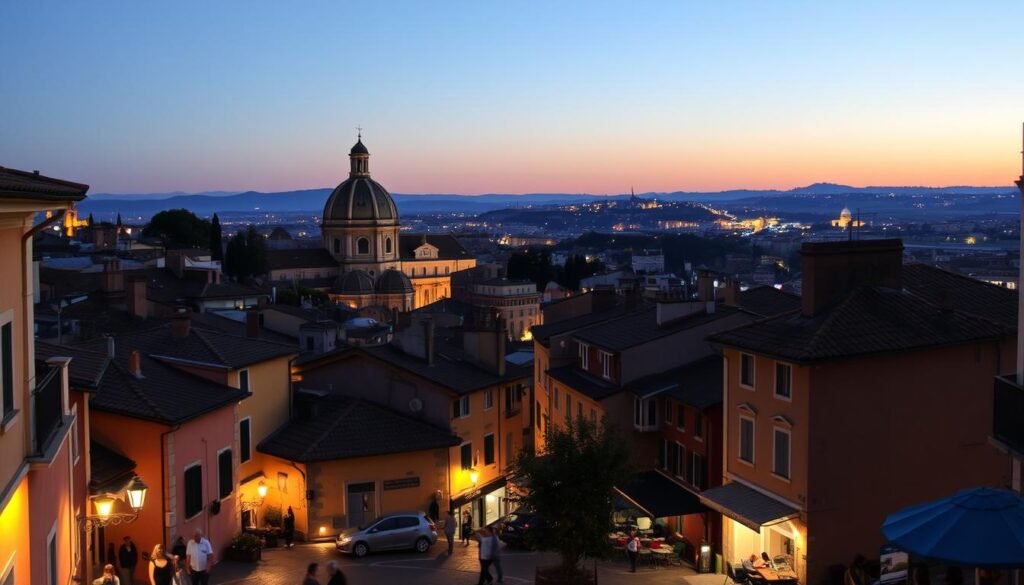
Aim for golden hour at the Capitoline terrace behind the museums for free, cinematic views that frame the Forum and rooftops. If you can, climb to the Pincio Terrace above Piazza del Popolo; the skyline with St. Peter’s dome on the horizon is one of the city’s signature views rome loves to show.
Bring a light layer—the breeze at those viewpoints cools quickly. Finish by walking back along the river as lights shimmer on the water, a relaxed finale to a night that feels very much at the heart of the city.
Day Trip How-To: Pompeii, Herculaneum, and Mount Vesuvius
Hop a morning high-speed train and trade the city for plastered streets, vivid frescoes, and a volcanic rim on a full, rewarding trip. An early start gives you the best rhythm for travel and visits.
ItaliaRail logistics from Roma Termini to Napoli Centrale
Book a fast ItaliaRail departure from Termini so you reach Napoli Centrale in about an hour. From Napoli, local trains run frequently to Pompeii. Allow extra time for transfers and ticket validation.
Beating the crowds at Pompeii, then on to Herculaneum
Arrive at Pompeii near opening (about 8:30) to explore the main highlights before crowds swell. Start with the amphitheater, forum, and bathhouses to see essential ruins and learn the site’s history.
Midday, head to Herculaneum for a more compact site. Its denser preservation reveals mosaics and timber remains that show everyday Roman civilization in finer detail.
Shuttle and trail details for Vesuvius crater views
Shuttle buses serve the trailheads up Vesuvius. If conditions allow, hike to the crater rim for broad views over the Bay of Naples. Wear sturdy shoes and carry a light layer—winds can pick up near the summit.
| Leg | What to do | Timing tip | Why it matters |
|---|---|---|---|
| Termini → Napoli | Take ItaliaRail high-speed | Book early morning departure | Saves travel time for site visits |
| Pompeii | Amphitheater, forum, baths | Arrive at opening (≈8:30) | See key ruins before crowds |
| Herculaneum | Mosaics, timber remains | Visit mid to late morning | More compact, less walking for families |
| Vesuvius | Shuttle + crater hike | Check shuttle schedules; allow buffer | Panoramic views and volcanic context |
Pack water and a quick snack from station kiosks to keep moving. Consider a short audio tour to add context without slowing your pace. After a full day, head back to the city for a light dinner and well-earned rest.
Eat & Drink: From Roman Trattorie to Speakeasy Nights
When the sun drops, the city’s food life sharpens—trattorie glow and speakeasies come alive. Plan dinner near your daytime route so you spend more time savoring plates and less time hopping across streets.
Classic plates and chef-driven options blend across the historic center and Piazza Navona.
Classic Roman plates near the historic center and Piazza Navona
For honest, seasonal cooking, Romanè feels like a warm hug after a long day. Choose casual trattorie on quieter lanes to keep evenings relaxed and conversational.
Chef-driven dining: Romanè, Le Jardin de Russie, Acquolina, Per Me, Il Pagliaccio
Book Le Jardin de Russie for a garden-kissed setting and refined dishes. Acquolina offers inventive tasting menus if you crave Michelin-level creativity.
Per Me serves playful “tappi” with a zero-waste ethos, while Il Pagliaccio is your top splurge for a multi-course culinary narrative—reserve well ahead.
Cocktails at the Jerry Thomas Project to cap your evening
Finish at the Jerry Thomas Project for crafted cocktails in vintage style. Note the reservation policy and arrive with time to savor each drink.
“Ask staff for wine by the glass—the locals love to point out what’s drinking well right now.”
| Choice | Vibe | Tip |
|---|---|---|
| Romanè | Seasonal, comforting | Great for classic plates after sightseeing |
| Le Jardin de Russie | Garden dining, refined | Book early for terrace seating |
| Acquolina / Per Me / Il Pagliaccio | Innovative to fine dining | Reserve; expect tasting menus and chef storytelling |
| Jerry Thomas Project | Speakeasy cocktails | Late-night cap; check reservation rules |
Conclusion
Close your trip by saving space for a last, quiet view that ties the days together. Protect a little time for a morning church visit and one rooftop pause so the city’s scale lands. When you visit rome with this plan, early starts and a couple of strategic bookings free up more moments to wander.
Let the Eternal City reveal its treasures between anchors. Seek art and history in small chapels, at St. Peter Basilica, or under the steps of Trinità dei Monti. Pause at Piazza del Popolo or a terrace for views rome remembers you by.
On your final day, pick a top lookout and watch the dome as light shifts. Carry those flavors, conversations, and images home—arrivederci for now; the Eternal City will call you back when the time is right.