
To prepare for a first safari in Kenya, choose a realistic route, arrange health and travel documents early, pack for changing temperatures and limited luggage, and book a reputable safari operator with clear transport and safety procedures.
A Kenyan safari is easier to enjoy when the practical details are settled before you arrive. Game drives often begin early, journeys can be long, and conditions vary between Nairobi, the highlands, the Maasai Mara, and coastal areas. This guide will help you decide where to go, what to arrange, what to pack, and how to behave responsibly around wildlife.
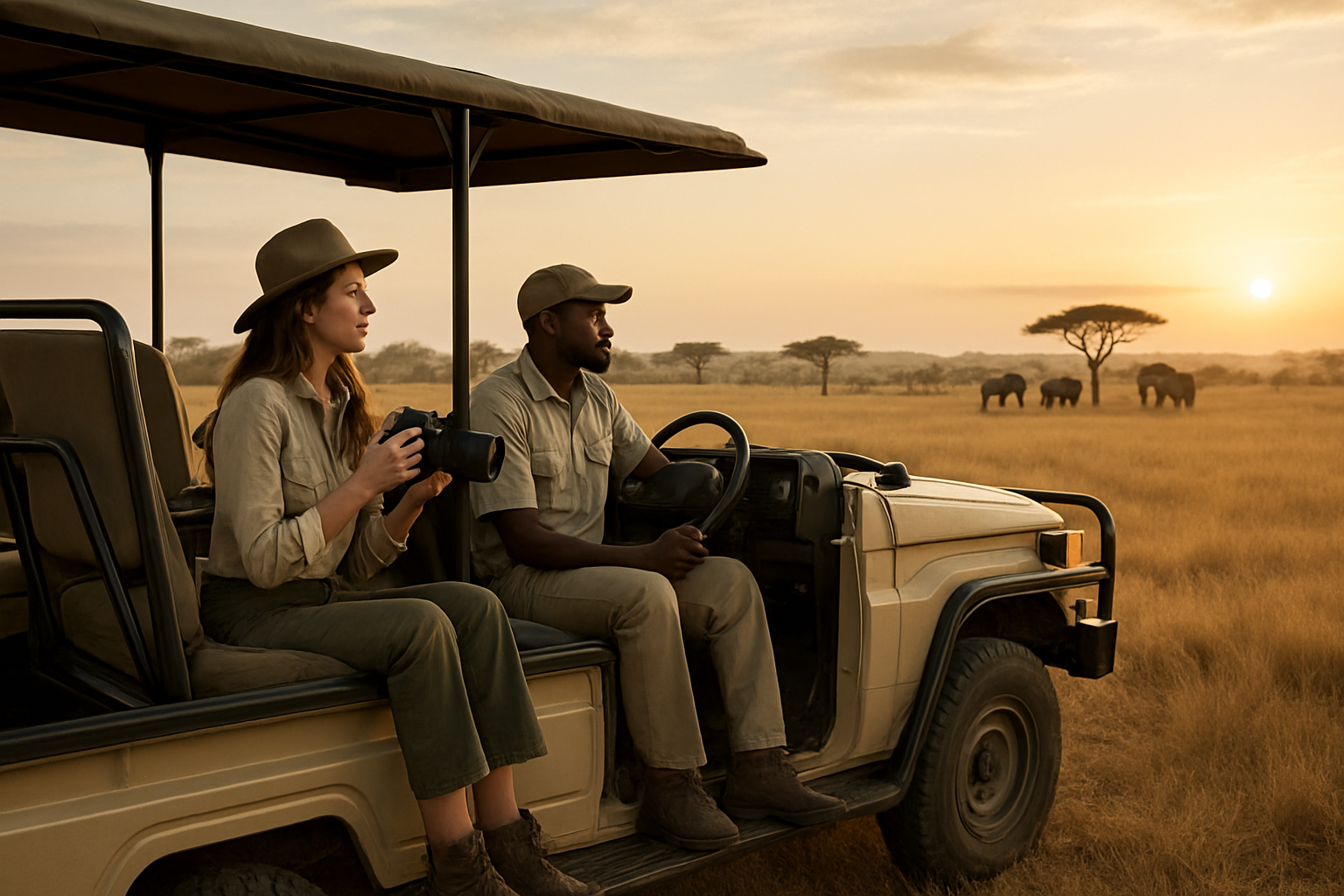
1. Define the safari you actually want
The first step is not choosing a lodge. It is deciding what kind of experience matters most to you. Kenya can offer classic game drives, birdwatching, family-friendly camps, conservation visits, walking experiences in approved areas, and beach-and-safari combinations.
For a first trip, keep the route manageable. Two wildlife regions usually provide more time for meaningful game viewing than a rushed itinerary covering four or five parks. The Maasai Mara is the familiar choice for open savannah and large wildlife populations, while Amboseli is known for views toward Mount Kilimanjaro, and Laikipia offers conservancies with a different landscape and conservation focus.
Match the destination to your priorities
- Big-game viewing: Compare the Maasai Mara, Amboseli, Tsavo, and Laikipia rather than assuming one park is best for every traveler.
- Photography: Ask about vehicle design, seating access, roof openings, charging points, and whether the guide is comfortable allowing time for composition.
- Families: Check minimum ages, child policies, private vehicle options, and whether the camp offers activities outside standard game drives.
- Lower-impact travel: Look for conservancies or operators that explain wildlife rules, local employment, and community partnerships in specific terms.
- Safari plus beach: Leave a buffer day before a major international flight, especially if your safari includes road transfers or small aircraft.
The official Magical Kenya destination guide is useful for comparing regions and activities. Treat suggested itineraries as starting points, then check driving times and internal flight schedules with your operator.
2. Choose the timing carefully
Kenya’s wildlife areas are open across much of the year, but weather, vegetation, visitor numbers, and animal behavior change by season. There is no single month that guarantees every desired sighting. A responsible operator should explain what conditions are likely rather than promising specific animals or events.
Dry periods can make animals easier to spot around water and may produce more comfortable roads in some areas. Wetter periods can bring greener scenery, fewer visitors in some locations, and challenging road conditions. If your main goal is the Great Migration, ask exactly which part of the migration cycle the itinerary is designed around; dates can vary and river crossings are never guaranteed.
Also consider your tolerance for early starts, dust, heat, and long drives. A season that looks attractive on a calendar may not suit you if you dislike rough roads or need a slower pace.
3. Build a route with realistic travel time
Map the route before booking accommodation. Nairobi is commonly used as an arrival point, but the distance between parks can make a road-heavy itinerary tiring. A journey that looks short on a map may take much longer because of road conditions, traffic, stops, and wildlife-area access procedures.
Ask whether each transfer will be by road, scheduled aircraft, or private charter. Small aircraft often have strict baggage limits, and soft-sided bags may be required. Confirm the exact allowance in writing before buying luggage or packing bulky equipment.
A sensible first safari often includes:
- One arrival night in Nairobi if your international flight lands late or you are connecting to a domestic flight.
- Three or more nights in a main wildlife area rather than changing camps every night.
- A full day or half-day buffer before an important onward flight.
- Time for rest after long transfers instead of scheduling a demanding activity immediately after arrival.
For transport planning, you can compare flights through flight search tools, but confirm the final connection with your safari operator. If you plan to drive independently, review vehicle requirements and local conditions before renting through a car rental comparison service.
4. Check the operator before paying
A safari operator influences your safety, comfort, wildlife experience, and response to delays. Do not judge an itinerary only by the number of parks included. Ask who will operate the trip, whether the vehicle is private or shared, and what happens if a domestic flight or road transfer is disrupted.
Request clear answers to these questions:
- Is the vehicle designed for game viewing, with enough space for every passenger?
- Will one guide stay with you throughout the safari?
- Are park fees, conservation fees, meals, drinks, transfers, and activities included?
- What is the luggage limit on each internal flight?
- What is the cancellation and amendment policy?
- How does the company handle medical concerns, lost luggage, or a missed connection?
- Are walking activities led by qualified local professionals and conducted in permitted areas?
Avoid paying a large deposit without a written itinerary, supplier details, contact information, and terms. Travel insurance should cover the activities you intend to do, including evacuation or medical assistance where appropriate.
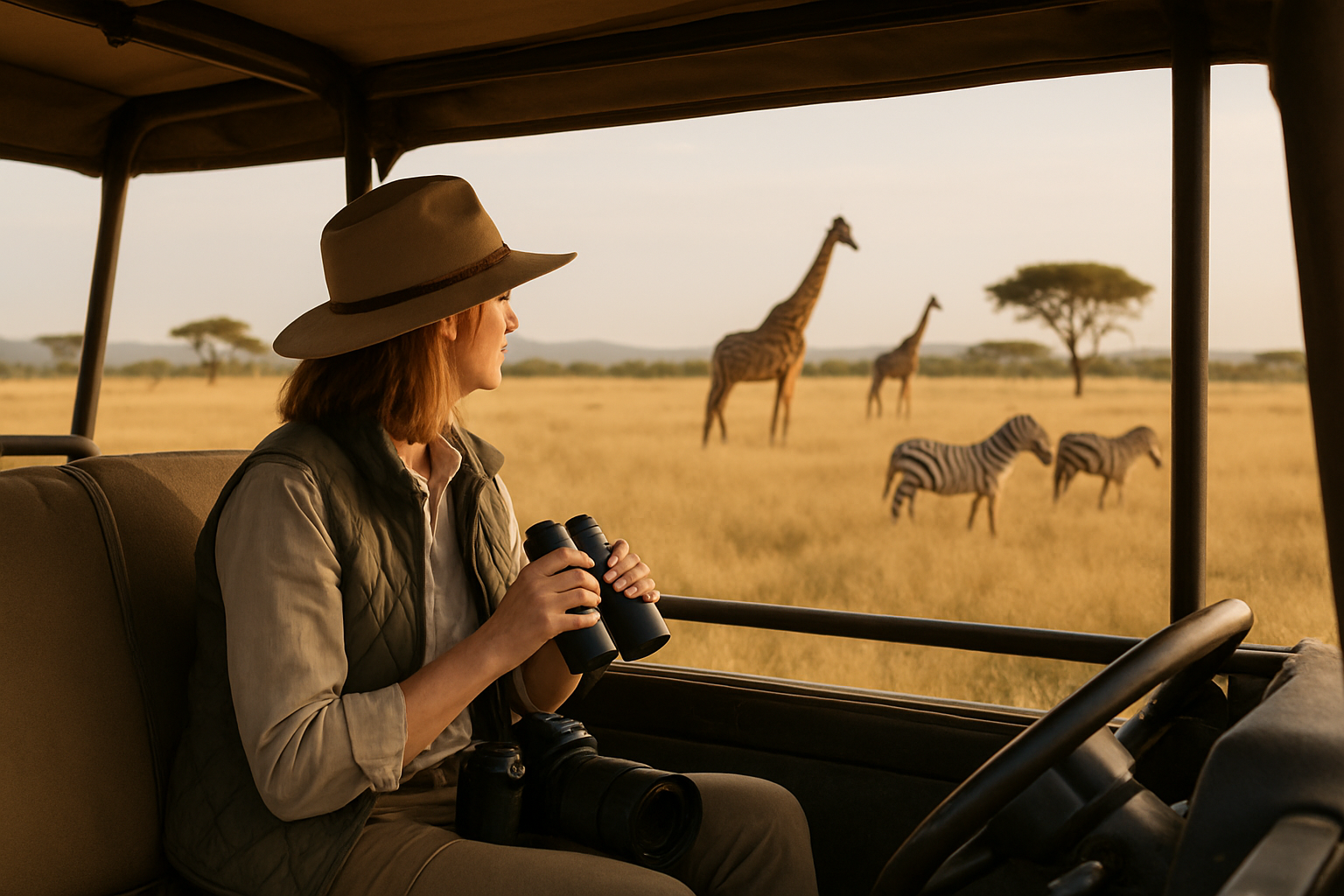
5. Arrange health preparation early
Book a travel-health appointment several weeks before departure. Recommendations depend on your itinerary, season, health history, previous vaccinations, and whether you will visit other countries. The CDC Kenya traveler-health page provides current information on vaccines, medicines, malaria prevention, and food and water precautions.
Discuss malaria prevention with a qualified clinician. Kenya contains areas where malaria prevention may be advised, but the appropriate medicine depends on the destination and your personal circumstances. Mosquito-bite prevention remains important: use repellent, wear suitable clothing in the evening, and follow your accommodation’s advice about screens or nets.
Ask specifically about yellow fever requirements, routine vaccinations, hepatitis protection, traveler’s diarrhea, altitude, and any prescription medicines. Do not wait until the week before departure if you need a vaccine series or a prescription.
Keep essential medicines, prescriptions, vaccination records, and a basic first-aid kit in your carry-on. If you develop a fever during the trip or after returning home, tell a clinician that you have recently visited Kenya.
6. Prepare your documents and communications
Check passport validity, entry rules, visa or electronic travel authorization requirements, and any transit-country conditions using official government sources. Requirements can change, so verify them close to departure rather than relying on an old blog post or a screenshot.
The U.S. Department of State’s international travel checklist covers travel advisories, document preparation, emergency planning, and the Smart Traveler Enrollment Program. Travelers from other countries should use their own government’s official guidance as well.
Make digital and offline copies of:
- Passport identification page and entry documents.
- Insurance policy and emergency assistance number.
- Flight tickets, lodge confirmations, and the safari itinerary.
- Prescription information and important medical contacts.
- Copies of cards and a trusted contact’s details.
Ask your operator about mobile coverage, Wi-Fi, charging, and the best way to communicate during transfers. A local SIM or eSIM may help, but do not rely on mobile data alone in remote areas.
7. Pack for function, not appearance
Safari clothing should be comfortable, washable, and suitable for temperature changes. Mornings can feel cold in an open vehicle, while midday may be hot and bright. Neutral colors are practical, but you do not need a completely new wardrobe.
Use soft luggage if you are flying between camps, and confirm weight and size limits before packing. Keep valuables and medicines with you rather than in checked or transferred luggage.
Use this comparison when reviewing your packing list:
Safari packing priorities and warning signs
| What to look for | Useful choice | Warning sign |
|---|---|---|
| Clothing | Light layers, long trousers, a warm fleece, and a compact rain shell | Only shorts and thin shirts, with no layer for early drives |
| Footwear | Comfortable closed shoes with secure soles | New shoes that have not been worn in |
| Sun protection | Wide-brim hat, sunglasses, sunscreen, and lip protection | Assuming the vehicle roof will provide shade all day |
| Insect protection | Repellent and clothing that covers arms and legs when needed | Relying on scented products or a single evening application |
| Photography | Camera, spare batteries, memory cards, and a dust-protective bag | Carrying heavy equipment without checking space or charging access |
| Comfort | Reusable water bottle, small day bag, tissues, and personal snacks | Bringing hard-sided luggage that cannot fit in the aircraft hold |
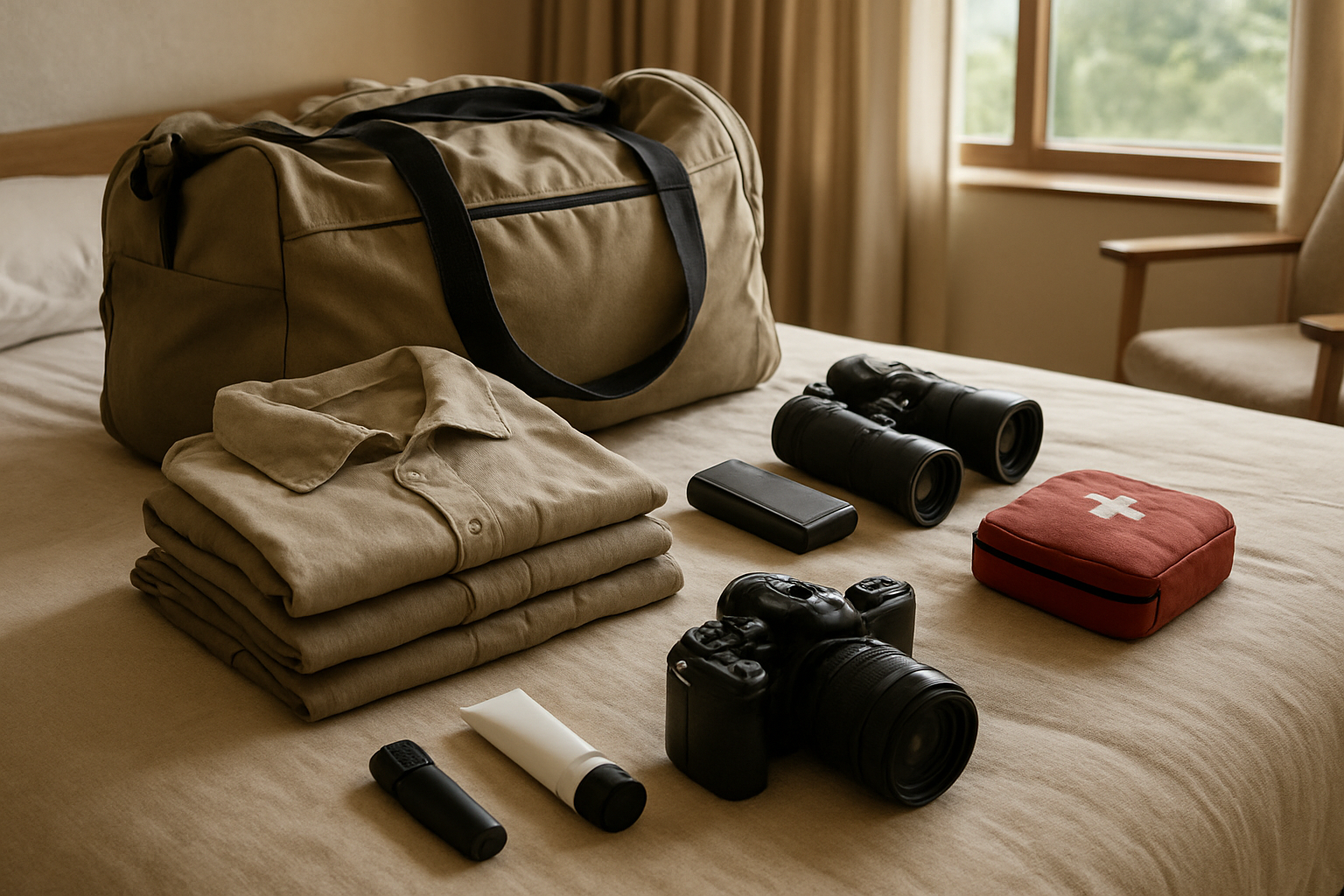
Binoculars are one of the most useful additions for a first safari. A small headlamp, power bank, and lightweight scarf can also be helpful, especially at camps where power is limited or temperatures change after sunset.
8. Learn the basic wildlife rules
Your guide is responsible for interpreting animal behavior and deciding how close the vehicle should be. Follow instructions immediately, remain seated when asked, and never call, feed, or provoke an animal for a photograph.
- Keep your voice low near wildlife.
- Do not lean out of the vehicle unless the guide confirms it is safe and permitted.
- Never walk outside camp after dark without an escort where one is required.
- Keep food and toiletries stored as instructed.
- Do not ask a driver to leave a designated route or crowd an animal.
- Respect photography restrictions and local community protocols.
Wildlife sightings are unpredictable. A quiet morning with tracks, birds, landscapes, and smaller animals can still be an excellent safari, and ethical viewing is more important than forcing a close encounter.
9. Plan for comfort and personal limits
Game drives may involve several hours of sitting on uneven roads. Tell your operator about back, mobility, dietary, sleep, or bathroom needs before arrival. A private vehicle may be worthwhile if you need frequent stops or want control over the daily rhythm.
If you are prone to motion sickness, ask your clinician about suitable medication and test it before traveling. Eat lightly before rough transfers, drink water regularly, and use breaks rather than waiting until discomfort becomes severe.
For airport or hotel transfers in Nairobi and other cities, arrange a trusted service in advance. You can compare options through pre-booked transfer services, then confirm pickup instructions and the driver’s contact details with your accommodation.
10. Use this final checklist before departure
- Route includes realistic transfer times and at least one useful buffer.
- Safari operator has supplied written inclusions, exclusions, and emergency contacts.
- Passport, entry documents, insurance, and confirmations are saved offline.
- Travel-health appointment is complete and medicines are packed in carry-on luggage.
- Internal-flight luggage limits have been checked.
- Clothing is layered, comfortable, and suitable for early mornings.
- Camera batteries, binoculars, repellent, sunscreen, and prescriptions are ready.
- A trusted person has your itinerary and copies of important documents.
- You know the wildlife, camp, photography, and tipping expectations.
Common mistakes on a first Kenya safari
Trying to see too much
Constantly changing camps reduces time for wildlife viewing and increases the chance that a delay affects the rest of the trip. Fewer bases usually create a calmer experience.
Booking by price alone
The cheapest itinerary may exclude park fees, transfers, drinks, or baggage costs. Compare the complete price and the practical inclusions, not just the headline rate.
Ignoring luggage restrictions
Small aircraft often have different rules from international airlines. Weigh your packed bags and ask whether camera equipment counts toward the allowance.
Expecting a guaranteed sighting
No responsible operator can guarantee a leopard, a crossing, or a perfect photograph. Choose a guide who explains probabilities and adapts respectfully to conditions.
Forgetting the first and last nights
Late arrivals, delayed flights, and long transfers can make an ambitious first-day plan stressful. Build the itinerary around recovery time rather than assuming every connection will run perfectly.
What if something goes wrong?
If your luggage is delayed: keep medication, documents, a change of clothes, and basic toiletries in your carry-on. Ask the airline and safari operator how replacement delivery will work before leaving the airport.
If rain changes the road conditions: follow the operator’s advice. A revised route or delayed departure may be safer and more comfortable than insisting on the original plan.
If you feel unwell: tell your guide or camp manager promptly. Seek professional medical advice for persistent vomiting, severe diarrhea, breathing difficulty, injury, or fever, particularly during or after travel.
If you are unhappy with the vehicle or schedule: raise the issue early and specifically. Explain whether the problem is seating, driving time, privacy, accessibility, or promised inclusions so the operator has a chance to correct it.
Advanced tips for a smoother first safari
Send your operator a short profile before arrival: your photography interests, preferred pace, dietary needs, mobility considerations, and any special occasion. This is more useful than simply saying you want to see the “Big Five.”
Consider adding a non-safari day between regions if your budget and schedule allow. It gives you time to rest, clean dusty clothes, back up photographs, and enjoy the destination beyond the vehicle.
Keep a small daily record of sightings, locations, weather, and guide observations. It will help you remember the trip and encourages you to notice tracks, plants, birds, and behavior rather than focusing only on dramatic animals.
Your next actions
- Write down your top three safari priorities and your preferred trip length.
- Choose one main wildlife area and one optional extension.
- Ask two or three operators for comparable written itineraries.
- Book a travel-health consultation and check official entry requirements.
- Confirm transport, luggage, insurance, and emergency arrangements before paying the final balance.
- Pack a tested, lightweight system that keeps essentials in your carry-on.
The best way to prepare for a first safari in Kenya is to leave room for the destination to set the pace. Choose a route you can enjoy without rushing, prepare carefully for health and logistics, and measure success by the quality of the experience—not by how many animals you manage to tick off a list.