
The best beach towns in southern Europe depend on the kind of coast you want: Lagos is the strongest all-rounder, Cefalù combines beach time with history, and Nafplio is an excellent choice for a slower, culture-focused trip. The right base should offer more than attractive water. You also need to consider beach access, local transport, evening atmosphere, day trips, seasonal crowds, and whether you will need a car.
This guide ranks 10 of the best beach towns in southern Europe using those practical criteria. It also explains who each destination suits, where each one falls short, and how to choose a coastal base that fits your trip rather than simply choosing the most famous name.
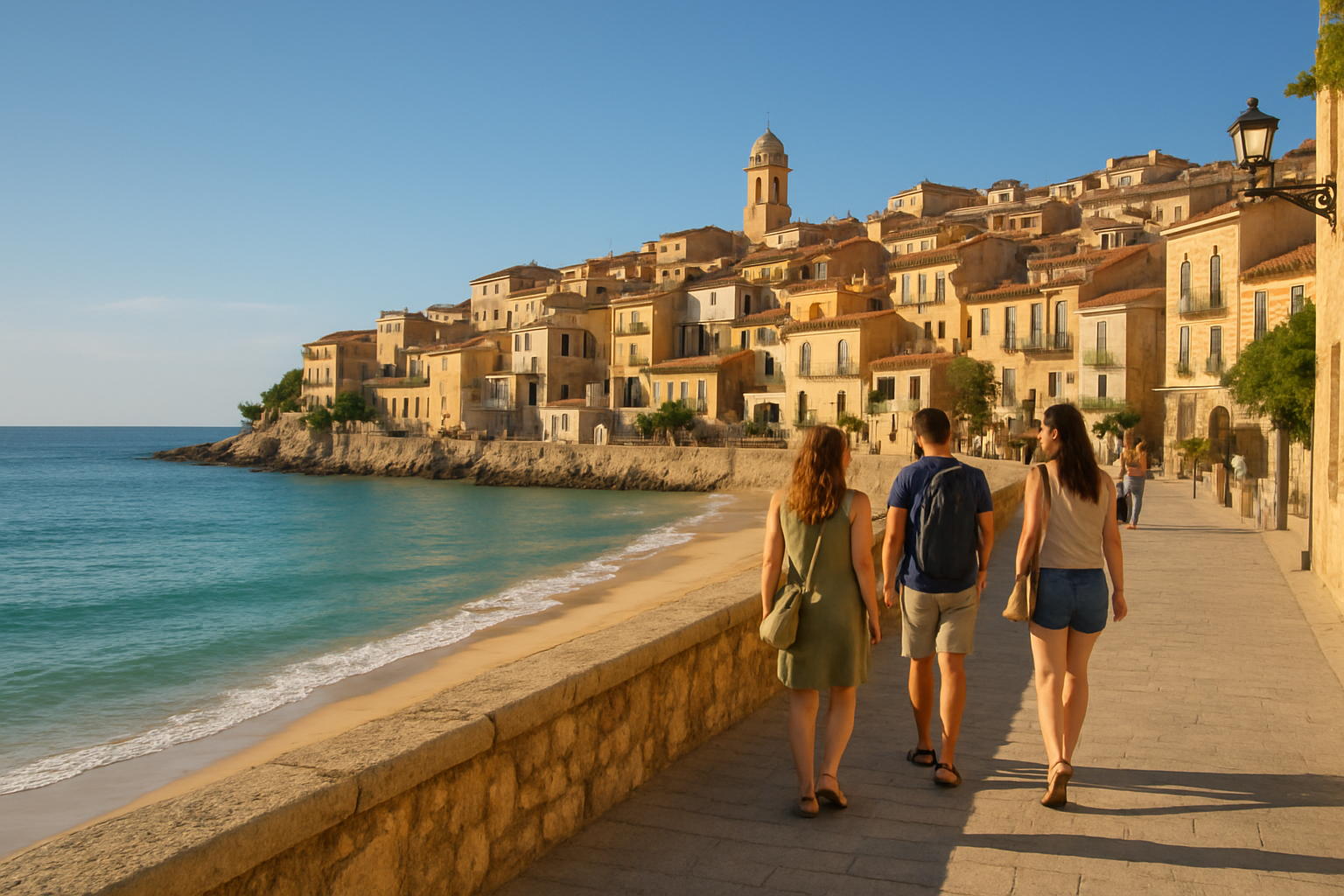
1. How these southern European beach towns were ranked
The ranking is based on usefulness as a holiday base, not on one “best” beach. A town scores well when it gives you several ways to spend a day without requiring a complicated itinerary.
- Beach quality and variety: sandy beaches, coves, swimming conditions, and access from the town.
- Town character: a walkable centre, local food, historic streets, and an atmosphere that works beyond the beach.
- Transport: the ease of arriving, moving around, and taking day trips without a car.
- Choice of accommodation and dining: enough variety for different budgets and travel styles.
- Seasonal practicality: whether the town remains enjoyable outside the busiest summer weeks.
Conditions change by season. A small cove can be ideal in May or September but crowded in August, while a larger town may feel more comfortable for families because it has more services and backup activities.
For broader destination planning, compare the trade-offs in our guide to Croatia versus Greece for island beaches and our practical comparison of Portugal versus Spain for a family vacation.
2. Best beach towns in southern Europe at a glance
Use this table as a starting point, then read the individual assessments before booking.
| Rank | Town | Country | Best for | Transport profile | Main limitation |
|---|---|---|---|---|---|
| 1 | Lagos | Portugal | Best all-round beach base | Good without a car | Very busy in peak summer |
| 2 | Cefalù | Italy | Beach and historic atmosphere | Good by train | Limited central beach space |
| 3 | Nafplio | Greece | History and easy swimming access | Best with some driving | Not a classic long-sand beach resort |
| 4 | Almuñécar | Spain | Value and local feel | Useful buses; car helpful | Less dramatic than famous coastal towns |
| 5 | Albufeira | Portugal | Families and nightlife | Reasonable, car helpful for variety | Resort development and crowds |
| 6 | Chania | Greece | Food, culture, and nearby beaches | Good town base; car helps | Best beaches are outside the centre |
| 7 | Rovinj | Croatia | Romantic old-town breaks | Good for excursions | Rocky swimming areas |
| 8 | San Sebastián | Spain | Food-focused city breaks | Excellent public transport | Weather is less reliably hot |
| 9 | Vieste | Italy | Low-key beaches and scenery | Car strongly recommended | Longer journey from major airports |
| 10 | Nazaré | Portugal | Ocean views and local character | Bus access; car useful | Atlantic water can be cool and rough |
3. The 10 best beach towns in southern Europe
1. Lagos, Portugal — Best overall
Lagos is the most balanced choice on this list. It combines a historic centre, a working marina, several accessible beaches, dramatic coastal formations, and enough restaurants and accommodation to support both short breaks and longer stays. The town’s official tourism information highlights access to beaches such as Dona Ana and the Ponta da Piedade area, with local transport linking parts of the coast. Visit Portugal’s Lagos guide is useful for understanding the layout before you book.
Best for: first-time visitors, couples, families with older children, and travellers who want a beach town without hiring a car for every outing.
What to do: walk the old town, take a coastal boat trip, visit Ponta da Piedade, and use the town as a base for nearby beaches. For transport planning, see our guide to getting around the Amalfi Coast without a car; the same planning principle applies here: check beach distances before assuming everything is walkable.
Limitation: Lagos is no longer a quiet secret. Book early for July and August, and expect the most famous beaches to feel much less peaceful during the middle of the day.
2. Cefalù, Italy — Best for beach time with historic scenery
Cefalù is one of the easiest towns to recommend when you want a genuinely attractive beach beside a historic centre. The main beach forms a broad curve below the old town, while the cathedral, narrow lanes, harbour, and Rocca give you reasons to explore after swimming. Italia.it describes the main lido as a gently sloping sandy beach, which makes it a practical option for families as well as couples.
Best for: travellers who want Sicily, Italian food, a walkable centre, and a beach that does not require a separate excursion.
What to do: swim early, explore the cathedral and old port, climb the Rocca if conditions are comfortable, and plan a day trip toward Palermo or the Madonie area.
Limitation: the central beach can feel crowded and organised in peak season. Cefalù is compact, so visitors wanting many different beaches within walking distance may prefer a larger coastal base.
3. Nafplio, Greece — Best for history and relaxed coastal days
Nafplio is not the obvious choice if your only goal is a long sandy beach outside your hotel. It is better understood as a handsome historic town with swimming options nearby. The Greek national tourism site identifies its position on the Argolic Gulf, while its beach guide points to walkable Arvanitia and larger beaches reachable by a short drive.
Best for: couples, history lovers, and travellers combining beach time with archaeological sites such as Mycenae and Tiryns.
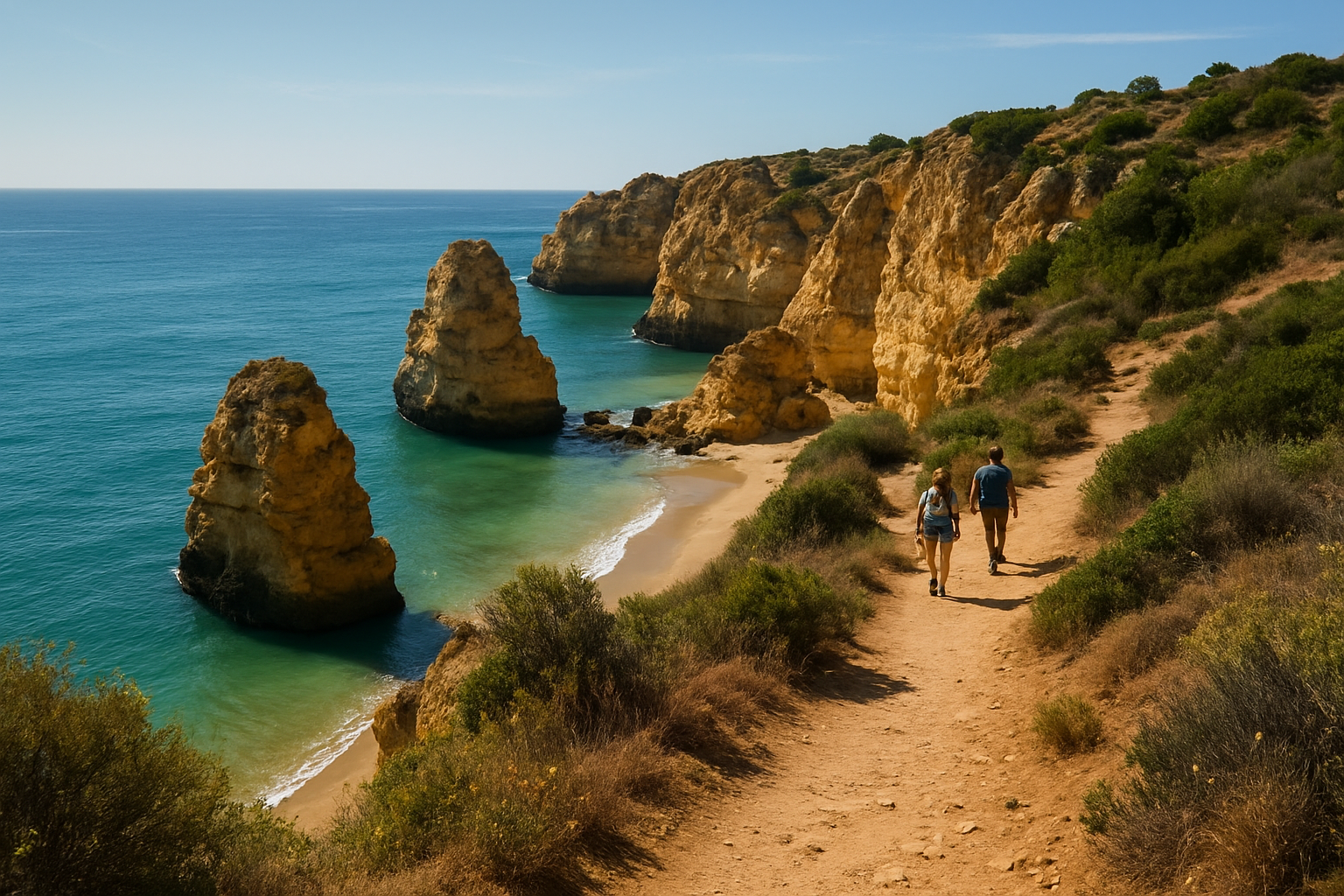
What to do: walk the waterfront, visit Palamidi Fortress, swim at Arvanitia, and use Nafplio for excursions around the Peloponnese.
Limitation: if you expect an island-style beach directly outside town, Nafplio may disappoint. A rental car gives you more flexibility, especially if you want to visit several beaches.
4. Almuñécar, Spain — Best for value and a more local atmosphere
Almuñécar on Spain’s Costa Tropical offers a useful middle ground between a large resort and a small village. It has beaches, a historic core, tropical-looking gardens, seafood restaurants, and access to the wider Granada province. It is less internationally famous than Málaga or Marbella, which can make the atmosphere feel more relaxed outside the busiest periods.
Best for: travellers seeking a Spanish seaside base with everyday services, reasonable variety, and fewer luxury-resort expectations.
Limitation: the coastline is more urban and less visually dramatic than the Algarve or the Amalfi Coast. A car is helpful if you want to explore the surrounding coves and mountain villages.
5. Albufeira, Portugal — Best for families and nightlife
Albufeira is a practical choice when your group wants clear organisation and plenty of options. The town offers beaches, family-friendly activities, restaurants, nightlife, boat trips, and a broad accommodation market. It is more developed than Lagos, but that can be an advantage when different travellers want different things from the same holiday.
Best for: families, groups, and visitors who want easy access to services and evening entertainment.
Limitation: the resort character is obvious in some areas, and the busiest nightlife zones are not ideal for a quiet romantic stay. Choose your neighbourhood carefully rather than booking solely by price.
6. Chania, Greece — Best for food, culture, and nearby beaches
Chania gives you more than a beach holiday. Its Venetian harbour, old streets, markets, and strong food scene create a rewarding base, while the wider region offers beaches ranging from accessible city options to famous west-coast sands. The trade-off is that the best swimming areas are generally outside the old town.
Best for: food-focused travellers, couples, and people who want a lively town with several possible day trips.
Limitation: summer traffic can make beach-hopping slow. If you plan to visit remote beaches, compare car rental, local buses, and organised excursions before finalising your accommodation.
7. Rovinj, Croatia — Best for a romantic old-town break
Rovinj is especially appealing if you value atmosphere as much as sand. The old town rises above the water, the harbour is attractive at sunset, and nearby wooded areas provide numerous places to swim. Most bathing areas are rocky or pebbly rather than broad sandy beaches, so water shoes and a realistic expectation about shore access are useful.
Best for: couples, photographers, and travellers who want an elegant Adriatic base with boat trips and nearby nature.
Limitation: the old town has steps and uneven surfaces, while some swimming spots lack the soft entry that families with very young children may prefer.
8. San Sebastián, Spain — Best for food and an urban beach
San Sebastián works well when you want a proper city break with beach access. La Concha is unusually integrated into the city, while Zurriola appeals more to surfers and a younger crowd. The town’s dining culture gives you a strong reason to visit outside the hottest summer weeks.
Best for: food lovers, short breaks, public-transport travellers, and visitors who do not need guaranteed Mediterranean heat.
Limitation: the Atlantic climate is more changeable, and the water may feel cooler than in southern Mediterranean destinations. Choose San Sebastián for the complete city-and-coast experience, not only for sunbathing.
9. Vieste, Italy — Best for quiet coastal scenery
Vieste sits on the Gargano peninsula, where beaches, cliffs, sea caves, and forested landscapes create a different feel from the crowded western Italian coast. The town has a compact historic centre and a useful selection of beaches, but the surrounding area is the real attraction.
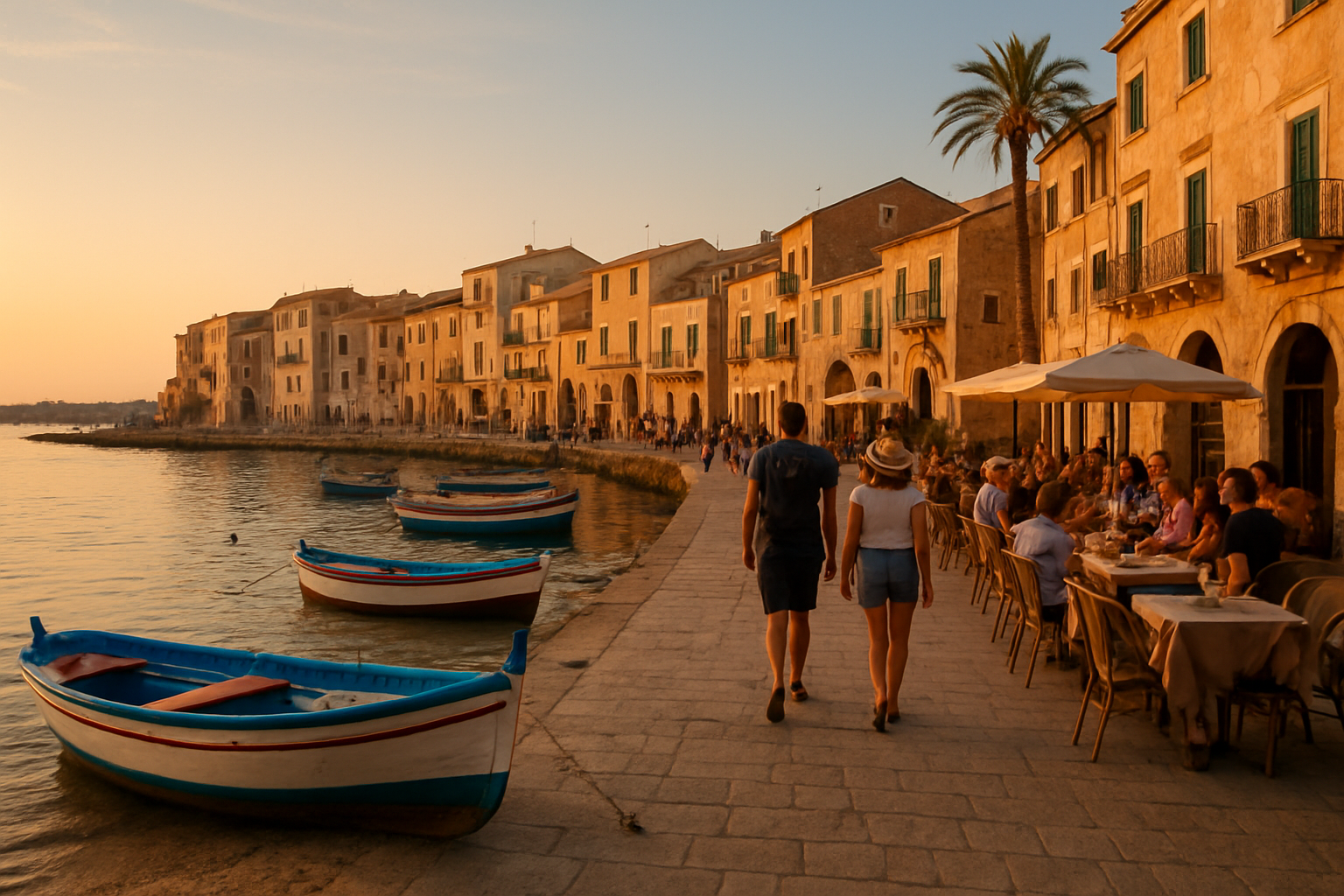
Best for: travellers with a car, nature lovers, and anyone looking for a slower Italian seaside holiday.
Limitation: reaching Vieste takes more planning than reaching Cefalù or San Sebastián. Without a car, you will need to accept a narrower range of excursions and check seasonal bus connections carefully.
10. Nazaré, Portugal — Best for Atlantic character
Nazaré is a strong choice if you prefer an authentic Atlantic setting to a sheltered Mediterranean cove. The town has a long beach, a traditional fishing identity, dramatic viewpoints, and a clear split between the lower waterfront and the higher Sítio district. Its famous giant-wave season is a reminder that the ocean here can be powerful rather than placid.
Best for: photographers, surfers, road trippers, and travellers combining beaches with central Portugal.
Limitation: the water is cooler and conditions can be rougher than in the Algarve. It is not the best pick if your priority is consistently warm, calm swimming.
4. How to choose the right town for your trip
Choose by beach style
For sandy beaches close to town, start with Cefalù, Albufeira, Lagos, or San Sebastián. For coves, cliffs, and rocky swimming, consider Lagos, Rovinj, or Vieste. For an itinerary where the beach is one part of a broader trip, Nafplio and Chania are stronger than a single-purpose resort.
Choose by transport
Travelling without a car is easiest in Lagos, Cefalù, San Sebastián, and the central areas of Chania. A car becomes more valuable in Vieste, Almuñécar, and around Nafplio. Before booking, map the accommodation to the old town, the nearest beach, the bus or train station, and the restaurants you are likely to use.
You can compare flight options through Kiwi.com or Aviasales, then check local transport and rental options through Localrent. For airport transfers, Kiwitaxi can be useful when arrival times make public transport inconvenient.
Choose by trip pace
- Three to four nights: Cefalù, San Sebastián, or Lagos.
- One week in one base: Chania, Albufeira, or Lagos.
- Road trip: Vieste, Nazaré, or Almuñécar.
- Culture-first holiday: Nafplio or Cefalù.
- Nightlife and convenience: Albufeira or central Chania.
5. Booking checklist for a beach-town holiday
- Check whether the nearest beach is sandy, pebbly, rocky, or reached by steps.
- Confirm the walking route from your accommodation, not only the straight-line distance.
- Look at seasonal transport timetables if you are travelling outside July and August.
- Reserve accommodation with air conditioning if visiting during the hottest months.
- Read recent information about parking before choosing a rental car.
- Allow for a quieter alternative beach in your daily plan.
- Book popular boat trips and airport transfers in advance during peak season.
6. Common mistakes when choosing a southern European beach town
Booking the most famous place automatically
Fame often means higher prices, more visitors, and less flexibility. A nearby town may provide better beaches or easier parking while still allowing a day trip to the famous landmark.
Assuming every beach is calm and warm
Atlantic and open-coast destinations can have wind, waves, and cooler water. Check the coast’s exposure and typical conditions before choosing a town for swimming with young children.
Ignoring the return journey
A destination may look close on a map but require several connections. Compare airport transfers, train or bus times, and the final walk to your accommodation before deciding that a car-free itinerary is practical.
Choosing accommodation by view alone
A sea view may come with steep streets, noise, or a long walk to groceries. Prioritise the features that matter most to your group, such as lift access, a kitchen, parking, or proximity to a quieter beach.
7. What if your first choice is sold out?
If Lagos is full, consider Albufeira for more accommodation choice or Nazaré for a different Portuguese coast. If Cefalù is unavailable, look at nearby Palermo-area bases and plan beach days as excursions. If Chania is too expensive, compare Rethymno or smaller villages while checking how easily you can reach the beaches you want.
For an autumn trip, prioritise towns with historic centres, restaurants, and museums rather than destinations built almost entirely around summer beach use. Our round-up of European destinations for autumn travel can help you broaden the search.
8. Final recommendations by travel scenario
- Best overall: Lagos, because it balances beaches, scenery, restaurants, and transport.
- Best for a compact beach-and-culture trip: Cefalù.
- Best for history and a slower pace: Nafplio.
- Best for families wanting convenience: Albufeira.
- Best for food and local excursions: Chania.
- Best for romance and old-town atmosphere: Rovinj.
- Best for a city break with beach access: San Sebastián.
- Best for a quieter road trip: Vieste.
- Best for Atlantic views and character: Nazaré.
- Best for a less obvious Spanish base: Almuñécar.
The best beach towns in southern Europe are not interchangeable. Choose Lagos if you want the safest all-round decision, Cefalù if you want history directly beside the beach, or Nafplio if swimming is part of a wider cultural itinerary. Once you match the town to your transport plans, preferred shore, and tolerance for summer crowds, the booking decision becomes much clearer.