
Portugal is usually the easier choice for a relaxed family vacation, while Spain is the stronger choice if your family wants more variety, bigger attractions, and a wider range of regions. Choose Portugal for a compact itinerary with beaches, scenic cities, and a gentler pace. Choose Spain when you want major museums, theme parks, lively cities, and more destination combinations.
The best answer depends less on which country is “better” and more on how your family travels. This comparison looks at the practical factors that affect a real trip: journey length, children’s ages, transport, beach access, food, sightseeing, weather, and how much moving around your family can comfortably manage.
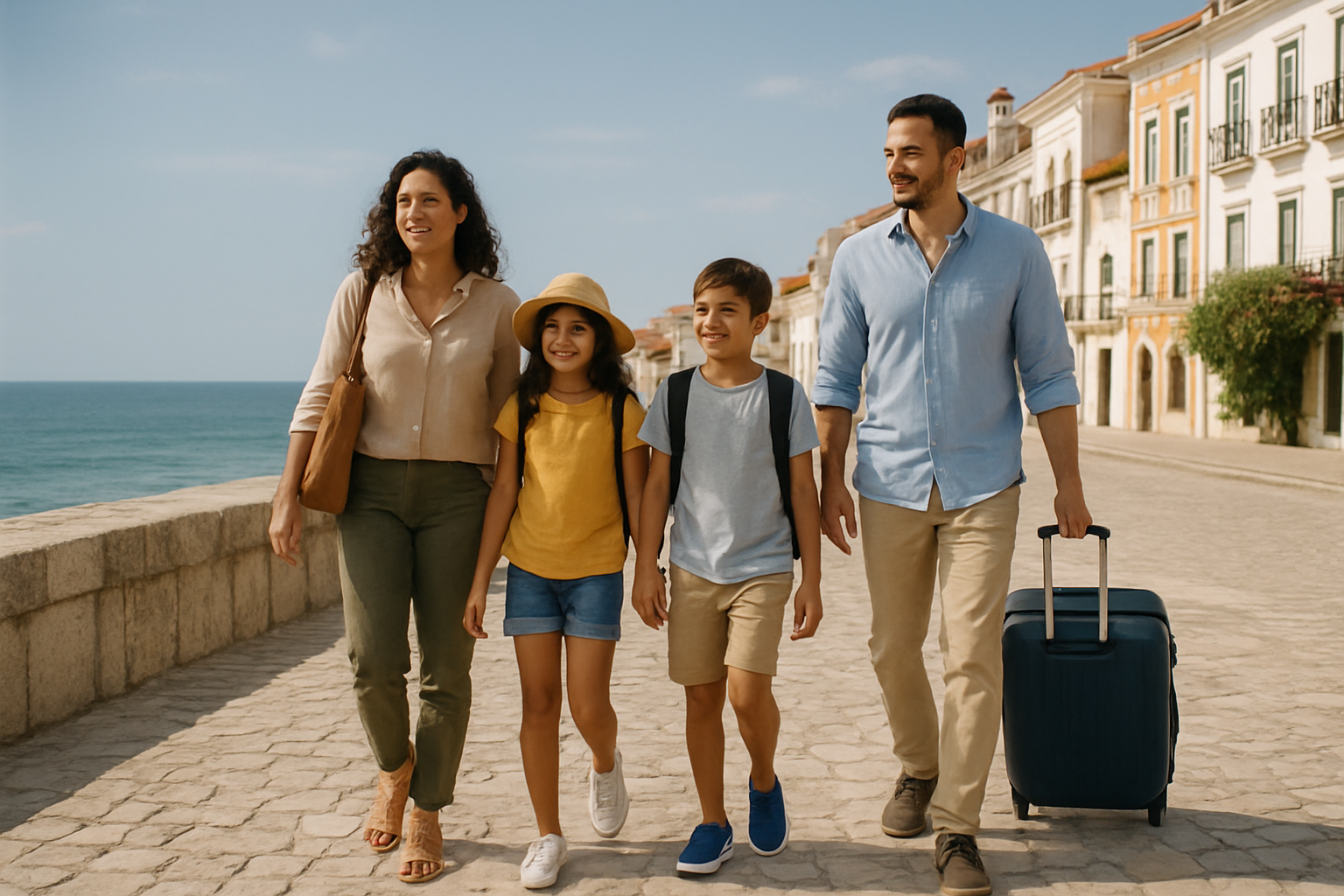
1. Start with the family vacation you actually want
Before comparing attractions, decide what a successful trip looks like for your family. A seven-day vacation with a toddler has different requirements from a two-week trip with teenagers. The same country can feel effortless or exhausting depending on the itinerary.
Write down your three highest priorities from the list below:
- Short transfer times and fewer hotel changes
- Warm-weather beaches and swimming
- Interactive attractions for children
- Historic cities and cultural sightseeing
- Outdoor activities and nature
- Good food with flexible meal options
- Reliable public transport
- A reasonable overall budget
Also note your children’s ages, whether anyone has mobility limitations, and whether your group is comfortable renting a car. These details can change the recommendation more than a general country ranking.
2. Portugal vs Spain for a family vacation: the quick comparison
Portugal and Spain share a warm Iberian setting, a strong food culture, and a mix of beaches, historic towns, and outdoor activities. The main difference is scale. Portugal often feels easier to combine in one trip, while Spain offers more choices but usually requires more planning and longer transfers.
For destination ideas, compare the family-oriented activities listed by the official Visit Portugal tourism portal with the beaches, museums, cities, and routes featured by Spain’s official tourism website.
Here is the practical overview:
| Category | Portugal | Spain | Best fit |
|---|---|---|---|
| Overall pace | Often easier to keep relaxed and low-transfer | Can be fast-paced because there are many regions and attractions | Portugal for slower trips; Spain for variety |
| Family beaches | Excellent Atlantic beaches, especially around the Algarve | Very broad choice, from Mediterranean resorts to northern beaches and islands | Spain for range; Portugal for a focused beach holiday |
| Major cities | Lisbon and Porto provide culture without requiring a huge itinerary | Madrid, Barcelona, Seville, Valencia, Malaga, and others offer distinct experiences | Spain for city variety |
| Child-friendly sightseeing | Castles, trams, viewpoints, riverfronts, and compact historic areas | Museums, stadiums, science centers, aquariums, theme parks, and historic sites | Spain for attraction depth |
| Driving needs | Optional for Lisbon, Porto, and some Algarve bases; useful for rural areas | Often useful outside major cities, especially for coast-and-inland combinations | Portugal for simpler car-free planning |
| Food flexibility | Simple seafood, grilled dishes, pastries, and familiar options are widely available | Wide regional variety, but meal times and local specialties may require more adjustment | Portugal for simplicity; Spain for culinary variety |
| Best trip length | About 7–10 days for a satisfying first visit | About 10–14 days if combining several regions | Portugal for shorter vacations |
This table is a planning guide, not a guarantee. A carefully chosen Spanish base can be easier than a rushed Portugal itinerary, and a poorly connected Portugal route can still involve tiring travel days.
3. Compare the destinations, not just the countries
Portugal: the strongest family combinations
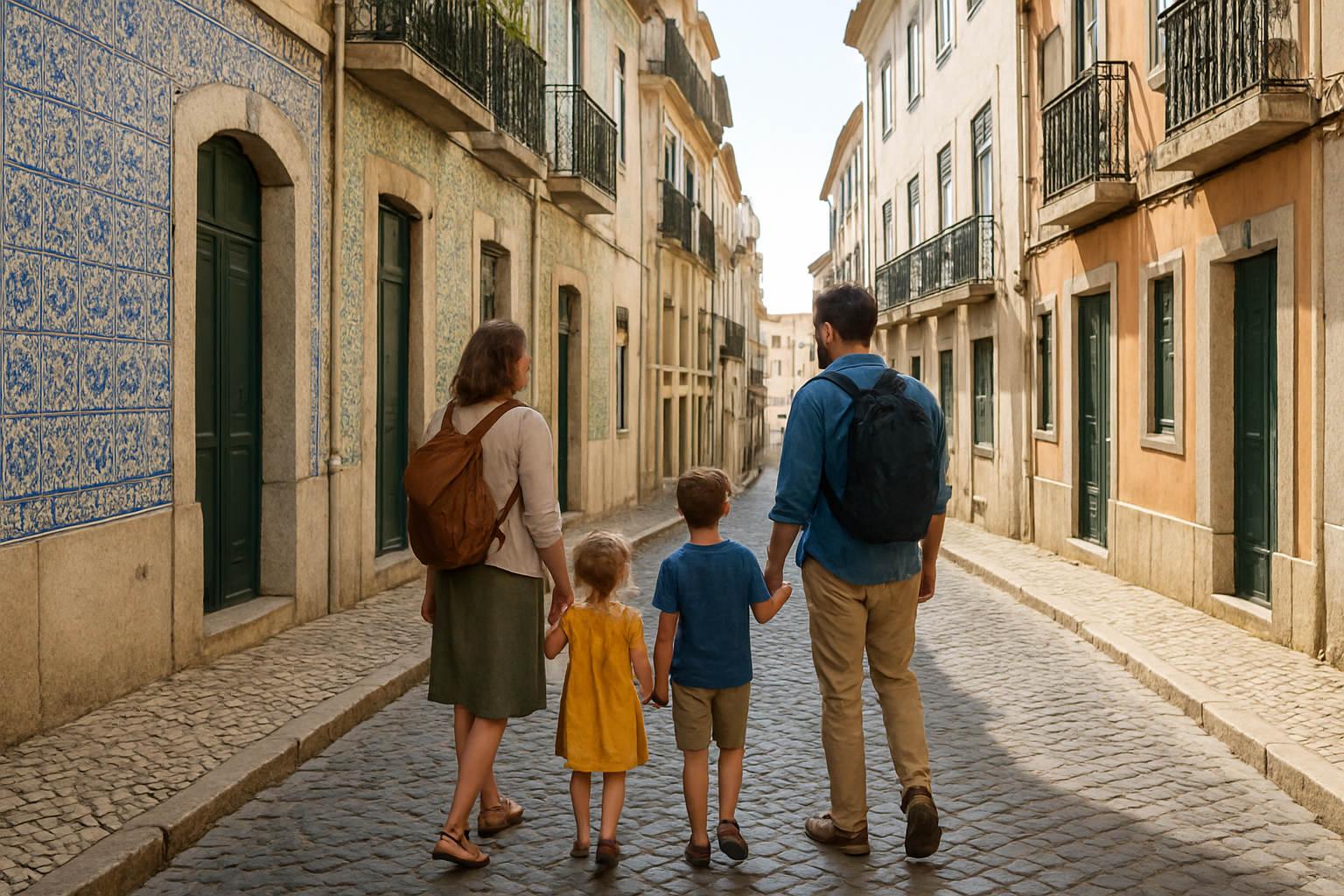
Lisbon is a useful first base for families who want historic neighborhoods, viewpoints, waterfront walks, and easy day-trip possibilities. However, the hills, cobblestones, and occasional tram crowds can be tiring with a stroller. Choose accommodation near a flatter, well-connected area and avoid scheduling several steep sightseeing days in a row.
Porto works well for families who enjoy a smaller city atmosphere, riverfront scenery, bridges, and food experiences. It is less suited to families expecting large-scale attractions every day, so consider pairing it with a coastal or nature-based stop.
The Algarve is the obvious choice for a beach-focused holiday. It offers resort areas, beaches, boat trips, and coastal scenery, but a rental car may make it easier to reach less central beaches and smaller towns. If you prefer not to drive, choose one well-connected base and arrange local excursions rather than attempting to cover the entire region.
For a route combining Lisbon, Porto, and the Algarve, see our guide on planning a seven-day Portugal itinerary. It can help you judge whether your preferred stops fit comfortably into one week.
Spain: the strongest family combinations
Spain is best approached by region. Barcelona can combine architecture, beaches, parks, markets, and family attractions, but it is busy and requires advance planning for popular sights. Madrid is a strong choice for museums, parks, major-city energy, and easy rail connections to other destinations.
Valencia offers a useful middle ground: a substantial city, a beach, and family-oriented attractions such as the City of Arts and Sciences. Seville is rich in architecture and atmosphere, although hot afternoons can make an intensive sightseeing schedule uncomfortable for young children.
The Costa del Sol and the Balearic Islands are more suitable when the priority is a resort-style break. Northern Spain can be rewarding for families who want greener landscapes, food, and outdoor activities, but it may not deliver the consistently hot beach weather some visitors expect.
Spain’s official travel information includes destination guidance, weather information, transport details, and practical legal advice, so check Spain’s official travel information page before fixing your route.
4. Compare transport and daily effort
Transport is one of the most important differences when traveling with children. A destination can look close on a map but still require airport transfers, long station connections, or multiple changes with luggage.
Portugal is generally easier to structure around two or three bases. A typical plan might use Lisbon for several nights, Porto or the Algarve for another section, and one final night near the departure airport if needed. This keeps the number of packing days manageable.
Spain has an extensive rail network and strong city connections, particularly around major routes. The official Renfe site provides current information for Spanish train tickets, routes, luggage, and travel preparation. Train travel can be comfortable, but the country’s size means that combining Madrid, Barcelona, Seville, and a beach resort may create a demanding schedule.
In Portugal, check current routes and ticket conditions through Comboios de Portugal. For a family trip, compare the full door-to-door journey rather than train time alone. Include the walk to the station, waiting time, luggage handling, and the transfer to your next accommodation.
Use these rules:
- For a week-long trip, limit yourself to two main bases whenever possible.
- For a ten- to fourteen-day trip, add a third base only if the transfer is straightforward.
- Schedule a lighter day after a long arrival or intercity journey.
- Keep beach equipment and children’s essentials accessible rather than buried in large suitcases.
- Check whether your accommodation has an elevator before booking in an older historic building.
5. Compare beaches, weather, and outdoor time
Portugal’s coast is Atlantic, so beaches can be scenic and spacious but water temperatures and wave conditions may not suit every child. The Algarve is often the easiest Portuguese region for a classic beach holiday, while Lisbon’s nearby coast gives you a mixture of city and seaside time.
Spain offers more beach types. Mediterranean resorts and islands may provide calmer swimming conditions, while northern beaches can be cooler and more weather-dependent. If swimming is central to your trip, check the exact beach, not just the country, and look for sheltered water, lifeguard information, shade, and nearby facilities.
Summer heat also affects the choice. Inland and southern Spanish destinations can become very hot during the middle of the day, while Portugal’s Atlantic influence may feel different from Spain’s Mediterranean or inland climates. Plan outdoor sightseeing early, protect children from sun exposure, and leave time for rest.
6. Compare food and family routines
Portugal is often a straightforward choice for families who prefer grilled food, rice, potatoes, seafood, soup, sandwiches, and pastries. You can still find adventurous dishes, but it is usually possible to keep meals simple when children are tired.
Spain offers greater regional variety. Tapas-style dining can work well for families who enjoy sharing small portions, while larger cities provide international food and familiar chains. The challenge is timing: dinner may be later than young children are used to, especially in popular areas.
To avoid meal-related stress in either country:
- Book lunch near a planned attraction instead of crossing town when everyone is hungry.
- Carry a small snack for transport days and late restaurant starts.
- Ask accommodation staff about quieter local restaurants away from the busiest squares.
- Check whether a beach town has supermarkets, pharmacies, and casual food within walking distance.
- Do not plan a major attraction immediately after a long sit-down meal if your children need downtime.
7. Match each country to your children’s ages
Traveling with babies and toddlers
Portugal often has the edge for a first Iberian trip with very young children because a compact route is easier to maintain. Lisbon’s hills and uneven streets are the main practical concern, so a carrier can be more useful than a stroller in some areas.
Spain can also work well, especially if you stay in one city or a resort. Avoid trying to combine several distant regions. A comfortable apartment, nearby park, short outings, and predictable meal options may matter more than the number of landmarks you visit.
Traveling with school-age children
Both countries are strong choices. Portugal offers castles, boat rides, beaches, trams, caves, and visually memorable city experiences. Spain adds a larger range of science centers, aquariums, stadium tours, interactive museums, and amusement parks.
At this age, build each day around one major activity and one flexible option. For example, pair a museum with a park, or a beach morning with a short evening walk.
Traveling with teenagers
Spain may appeal more to teenagers who want large cities, football, shopping, nightlife atmosphere without necessarily participating in it, or highly recognizable attractions. Barcelona, Madrid, Valencia, and Seville can each support a different style of trip.
Portugal is a better fit for teenagers interested in surfing, photography, food, coastal scenery, independent exploration, and a less hectic atmosphere. It can also work well as part of a broader Europe itinerary.
8. Choose based on your budget without relying on stereotypes
Neither country should be treated as automatically cheap or expensive. Costs vary by city, season, accommodation type, beach access, attraction tickets, and how early you book. A resort area in peak summer may cost more than a large city during a quieter period.
Compare a realistic daily budget using the same assumptions in both countries:
- Family room or apartment with enough space
- Breakfast and one restaurant meal
- Local transport or parking
- Two paid attractions every three days
- Airport transfers
- Beach equipment, snacks, and occasional taxis
Portugal may offer a simpler low-to-mid-range plan when you stay in fewer places. Spain may deliver better value if your family wants a resort with extensive facilities or if you can use efficient rail connections between major cities. The cheaper headline room rate is not necessarily the cheaper trip once transfers and attraction costs are included.
9. Common mistakes when choosing Portugal or Spain
- Trying to see too much: Spain especially rewards regional planning. Do not treat the whole country as one short itinerary.
- Choosing a beach by photographs alone: Check swimming conditions, shade, access, restrooms, and distance from accommodation.
- Ignoring hills and walking surfaces: Historic centers in both countries can be tiring with strollers or limited mobility.
- Assuming every city is equally car-free: Major cities are often manageable without a car, but rural beaches and small towns may not be.
- Booking the wrong accommodation type: A stylish central room may be less useful than an apartment with laundry, a kitchenette, and a quiet sleeping area.
- Planning only adult interests: Alternate cultural visits with parks, water, food, or hands-on activities.
- Leaving documents until the last minute: Families should verify passport validity, entry rules, and requirements for children through the official EU travel-document guidance.
10. What if your family cannot decide?
Choose a one-country trip first
If this is your first family visit to Iberia, choosing one country usually produces a more enjoyable trip than dividing a short vacation between both. Seven days is enough for a useful Portugal itinerary, but it can feel rushed if you add several Spanish cities as well.
Combine both only with a clear reason
A Portugal-and-Spain trip makes sense when you have at least ten to fourteen days, convenient open-jaw flights, and a route that follows geography rather than jumping between distant destinations. Examples might include Lisbon and Porto followed by western Spain, or the Algarve paired with nearby Andalusia. Confirm current cross-border transport before booking because schedules and seasonal services can change.
Use the children’s strongest interest as the tie-breaker
Choose Spain if a particular attraction, football experience, major aquarium, or theme park is the trip’s central motivation. Choose Portugal if the family’s shared goal is beach time, scenic towns, surfing, food, and a manageable rhythm.
11. Family vacation decision checklist
Before booking, answer these questions:
- How many full days will you have after arrival and before departure?
- How many hotel changes can your children handle comfortably?
- Will you need a car for the places you genuinely want to visit?
- Are Atlantic waves acceptable, or do you need calmer swimming water?
- Will the hottest part of the day overlap with your main sightseeing plans?
- Does your accommodation have enough beds, a lift, laundry, and a practical location?
- Have you allowed time for naps, snacks, weather changes, and unplanned stops?
- Are passports, visas, consent documents, and medical or travel insurance details ready?
For more ideas beyond Iberia, you can also compare our guides to European destinations for autumn travel and Maui versus Oahu for a family-style vacation.
12. Next actions before you book
- Select two possible regions in Portugal and two in Spain.
- Build a sample itinerary with no more than one major attraction per day.
- Check transfer times from airports and stations to family-suitable accommodation.
- Price the complete trip, including transport, meals, admissions, and car costs.
- Review official tourism and government travel information for current conditions and entry requirements.
- Choose the destination that leaves the most room for rest, not merely the one with the longest attraction list.
Final verdict: Portugal or Spain for a family vacation?
Portugal is the better default for a shorter, calmer, and easier-to-organize family vacation. It suits families who want a combination of cities, coastline, local food, and manageable travel days without building a complicated route.
Spain is the better choice when variety is the priority. Choose it for major urban attractions, theme parks, football, museums, regional food, resort options, or a longer trip where you can focus on one part of the country.
The conditional answer is simple: choose Portugal when reducing travel effort will improve the family experience; choose Spain when your children’s specific interests justify the extra planning and distance. In both cases, a slower itinerary with well-chosen bases will usually outperform an ambitious schedule that tries to cover everything.