
The easiest way to plan a 7 day Portugal itinerary is to focus on two major bases and one carefully chosen regional add-on. For a first trip, spend three nights in Lisbon, two nights in Porto, and two nights in either the Algarve or another Lisbon-area destination.
Portugal is compact enough for a rewarding week, but trying to include every famous town can turn the trip into a sequence of check-ins and train rides. This guide helps you choose a sensible route, match destinations to your interests, arrange transport, and leave enough time for unplanned discoveries.
1. Choose the right shape for your week
Before booking hotels, decide whether your priority is culture, scenery, food, beaches, or a balanced introduction. Portugal offers all of these, but a seven-day trip cannot explore the country thoroughly from north to south.
A practical first-time route is a northbound journey: arrive in Lisbon, explore the capital and Sintra, continue to Porto by train, and then either depart from Porto or travel south if you have a suitable flight from Lisbon or Faro.
Portugal’s official tourism board provides regional information for Lisbon, Porto, the Algarve, and other destinations. Use its destination guide to compare areas before committing to a route.
Use this decision rule:
- Choose Lisbon and Porto only if you want architecture, museums, restaurants, nightlife, and a relaxed pace.
- Add Sintra or Cascais if you prefer palaces, gardens, coastal scenery, and easy day trips.
- Add the Algarve if beaches, cliffs, swimming, and outdoor time are central to the trip.
- Add Évora instead if you want history, Roman remains, regional food, and a quieter inland experience.
Do not treat a destination as essential simply because it is popular. The best itinerary is the one that fits your arrival airport, departure airport, season, mobility, and preferred rhythm.
2. Set your arrival and departure strategy
Open-jaw flights can save time. A common arrangement is to fly into Lisbon and home from Porto, or fly into Porto and home from Lisbon. If the fare difference is small, this can be more efficient than returning to your starting city.
If you must use a round-trip flight from Lisbon, keep the final night in Lisbon unless your departure is late and the connection is straightforward. A same-day transfer from Porto or the Algarve can be stressful if a train delay, traffic problem, or weather disruption affects your plans.
How many bases should you use?
Two bases are ideal for many travelers. Three can work when each move is simple and you pack lightly. Four or more usually means you are spending too much of the week checking in, finding stations, and carrying luggage over cobbled streets.
When comparing hotels, check the distance to the railway station, the slope between the property and nearby attractions, luggage storage, air-conditioning, and the latest check-in time. These details matter more than saving a few minutes on a map.
For ideas about planning other one-week trips, you can also compare the pacing in these guides to one week in Istanbul and one week in Thailand.
3. Build the Lisbon section around neighborhoods, not a checklist
Lisbon deserves at least three nights on a first visit. Its major sights are spread across hills and waterfront districts, so grouping nearby areas is more efficient than crossing the city repeatedly.
Day 1: Arrive and settle in. Keep the first day flexible. After checking in, explore the area around Baixa, Chiado, Rossio, or the waterfront. Walk a short section of the city, have an early dinner, and avoid booking a non-refundable evening experience immediately after a long flight.
Day 2: Historic Lisbon. Start with Baixa and Chiado, then continue toward Alfama and the Castelo de São Jorge area. Allow time for viewpoints, cafés, and the steep streets between districts. Lisbon’s hills are part of the experience, but they can make an overpacked schedule exhausting.
Day 3: Belém or a day trip. Use the morning for Belém’s riverside monuments and museums, or reserve the day for Sintra. If you choose Sintra, start early and select one or two major sites rather than attempting every palace.
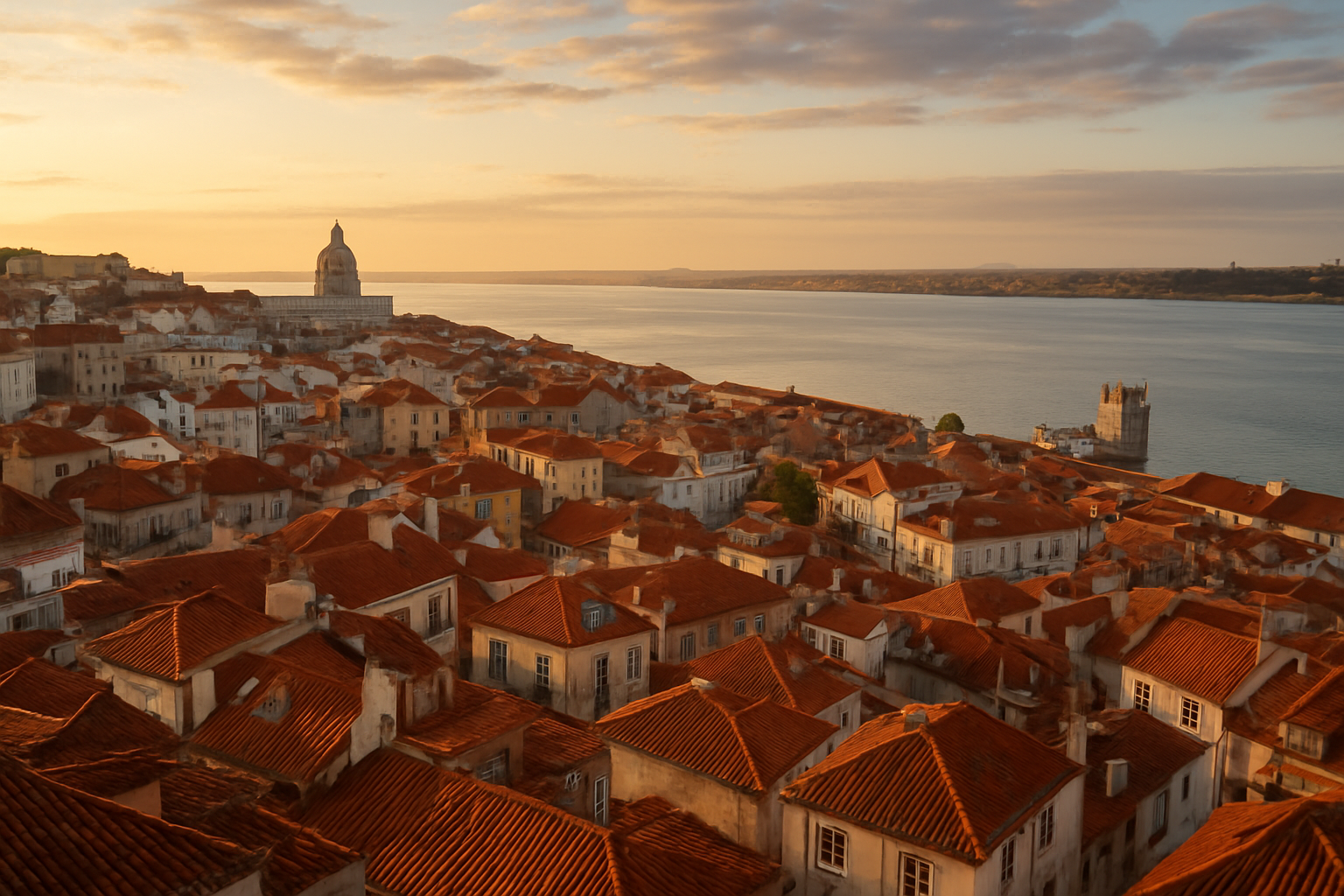
Lisbon’s historic neighborhoods are best explored in compact walking sections with time for viewpoints and cafés.
Where to stay in Lisbon
- Baixa or Chiado: convenient for a first visit and central sightseeing.
- Alfama: atmospheric and historic, but less convenient with heavy luggage and steep streets.
- Príncipe Real: a good choice for restaurants, shops, and a more residential feel.
- Belém: quieter and close to waterfront attractions, but less central for evening plans.
Lisbon is not a flat city. If you have mobility concerns, ask your accommodation about elevators, entrance steps, nearby slopes, and the easiest route from public transport.

4. Decide whether Sintra is a day trip or an overnight stop
Sintra works well as a day trip from Lisbon because it is close enough to visit without changing hotels. It is also a legitimate overnight destination if you prefer gardens, wooded hills, historic estates, and a slower atmosphere.
The Cultural Landscape of Sintra is recognized by UNESCO as a World Heritage site, reflecting the area’s combination of architecture, gardens, and natural setting. You can review the UNESCO overview of Sintra when deciding which attractions fit your interests.
For a day trip, choose a route before leaving Lisbon. Decide whether you want to prioritize the National Palace of Sintra, Pena Palace, Quinta da Regaleira, or a combination that does not require excessive backtracking.
Expect crowds at the most famous sites, especially during busy periods. Timed-entry requirements, local transport arrangements, and attraction closures can change, so check official attraction websites shortly before your visit.
Sintra checkpoint
Your Sintra plan is realistic if it includes transport time, a meal break, walking between stops, and a backup option for rain or queues. If it contains four or five major palaces in one day, remove at least one.
5. Travel between Lisbon and Porto efficiently
Porto is the natural second base for a balanced Portugal itinerary. The historic center, riverfront, bridges, markets, churches, and port-wine lodges provide enough for two full days without requiring a car.
Portugal’s national rail operator, CP, operates Alfa Pendular and Intercidades services connecting major cities. Check the official CP timetables for current departure times, journey options, and service updates before booking your day.
Book a train that leaves enough time to check out, reach the station, and manage luggage. A morning departure gives you more usable time in Porto, but an early train is not worthwhile if it makes the previous evening difficult.
Compare the following before selecting a service:
| Planning factor | What to look for | Warning sign |
|---|---|---|
| Departure time | A train after breakfast with a comfortable station connection | A departure so early that you lose sleep or risk missing it |
| Arrival station | A route that fits your accommodation and luggage plan | Assuming every station is equally convenient for your hotel |
| Ticket conditions | Correct passenger details and a fare you can manage if plans change | Booking without checking restrictions or refund rules |
| Luggage | A compact bag that can be lifted and stored without help | Large cases that are difficult on stairs, platforms, or cobbled streets |
| Connection buffer | Extra time between a train arrival and a tour or reservation | Scheduling a fixed activity immediately after arrival |
6. Plan two useful days in Porto
Day 4: Arrive and explore the historic center. Begin around São Bento Station, the cathedral, and the upper streets of the old town. Walk toward the Luís I Bridge and cross to Vila Nova de Gaia if your energy allows.
Porto is hilly, and some of the most scenic routes involve stairs or uneven paving. Wear shoes with secure soles and avoid planning a long walking tour immediately after carrying luggage through the city.
Day 5: Choose a theme. You can spend the day on food and markets, visit port-wine lodges, take a Douro Valley excursion, or explore nearby coastal neighborhoods. A full Douro Valley day trip is attractive, but it leaves little time for additional Porto sightseeing.
The historic center of Porto is listed as a UNESCO World Heritage site. Its official description highlights the city’s layered urban history and position along the Douro River; this is useful context if you are deciding whether to spend more time walking the city or touring outside it.
For a slower trip, replace the Douro excursion with a second neighborhood walk, a museum, or an unstructured afternoon by the river. Portugal rewards leaving room for meals and wandering.
Where to stay in Porto
- Baixa: convenient for restaurants, central sights, and nightlife.
- Ribeira: scenic and close to the river, but often busier and hillier.
- Boavista: quieter and better suited to travelers who prefer modern surroundings.
- Vila Nova de Gaia: useful for wine lodges and river views, but check the route back uphill.
7. Add the Algarve only when the logistics work
The Algarve is a strong choice for beaches, coastal walks, boat trips, and warm-weather relaxation. It is less suitable as a rushed add-on after two busy city days if reaching it requires a long transfer and another hotel change.
For two nights, select one base instead of trying to cover the entire region. Lagos suits travelers interested in cliffs, beaches, and historic streets. Faro is practical for transport and offers a compact old town. Albufeira is convenient for a lively resort atmosphere, while Tavira is calmer and more traditional in feel.
Use the official Algarve destination guide to compare coastal areas and activities. Distances that look short on a map can take longer by road, particularly in high season.

If your international flight leaves from Lisbon, consider returning to Lisbon the night before departure. If you fly home from Faro, the Algarve makes more sense as the final base. If neither arrangement works, choose Sintra, Cascais, or Évora instead.
A calm Algarve base can provide beach time without requiring travelers to move between several coastal towns.
8. Adjust the itinerary for your travel style
For architecture and history
Spend three nights in Lisbon, include Sintra, and use the remaining nights for Porto. Consider Évora instead of the Algarve if Roman history, churches, and regional culture matter more than beaches.
For food and wine
Keep Lisbon and Porto as your main bases. Add a food tour only after checking where it meets and how much walking it involves. In Porto, choose between a Douro Valley experience and a slower day of local restaurants and wine lodges.
For beaches and scenery
Use two or three nights in Lisbon, then move to one Algarve base. Reduce the number of museums and city neighborhoods rather than trying to fit every landmark around beach time.
For a low-stress first visit
Stay in Lisbon for four nights, use one day for Sintra, and spend three nights in Porto. This route avoids the extra southern transfer and still gives you two contrasting Portuguese cities.
9. Avoid these common planning mistakes
- Trying to see Lisbon, Porto, the Algarve, Coimbra, and Évora in one week: choose a maximum of three major bases.
- Booking every hour: leave flexible blocks for meals, weather changes, and slower mornings.
- Underestimating hills: group nearby sights and allow more time than a flat-city map suggests.
- Ignoring arrival and departure airports: a beautiful route can become inefficient if it requires unnecessary backtracking.
- Planning a major tour on travel day: leave a buffer after a train or flight.
- Carrying too much luggage: choose a manageable case or backpack for stairs, platforms, and uneven paving.
- Assuming beach weather: even coastal destinations can be windy, cool, or rainy outside peak summer.
10. Troubleshoot the route before you book
What if you arrive late in Lisbon?
Stay near a convenient transport connection and move sightseeing to the following morning. Do not use your arrival evening for a prepaid tour unless you have a generous delay buffer.
What if the Algarve feels too far away?
Replace it with Cascais, Sintra, or Évora. A shorter trip with fewer transfers is usually better than adding a destination that leaves you tired and worried about the next connection.
What if the weather is poor?
Keep indoor alternatives for each city, such as museums, historic churches, markets, cafés, and food experiences. For Sintra, check whether gardens and outdoor paths will still be enjoyable before committing to several sites.
What if you want to rent a car?
A car can be useful for rural areas, beaches, and smaller towns, but it is usually unnecessary for central Lisbon and Porto. If you rent one, avoid collecting it until you leave the major cities, and confirm parking arrangements before booking accommodation.
11. Use this final planning checklist
- Choose your arrival and departure airports.
- Limit the trip to two or three accommodation bases.
- Decide whether the Algarve is essential or optional.
- Group Lisbon sights by neighborhood.
- Choose one or two Sintra attractions in advance.
- Check official train timetables before booking non-refundable activities.
- Leave a buffer after every intercity transfer.
- Check attraction opening times and timed-entry requirements.
- Book accommodation near transport, not only near a landmark.
- Pack supportive footwear and a manageable bag.
- Keep one flexible half-day for weather, rest, or an unexpected favorite place.
12. Take these next actions
Start by writing down your three highest priorities: for example, historic neighborhoods, coastal scenery, and local food. Then compare two routes: Lisbon–Porto only, and Lisbon–Sintra–Porto with the Algarve or Évora omitted.
Next, check flight airports and train connections. Only after those details work should you reserve hotels. Finally, book a small number of time-sensitive experiences and keep the remaining schedule flexible.
Frequently asked questions
Is seven days enough for Portugal?
Seven days is enough for a focused first visit, especially if you concentrate on Lisbon and Porto. It is not enough to explore the mainland comprehensively, so choose depth over a long list of destinations.
Should I visit Lisbon or Porto first?
Start with the city that best matches your arrival flight and finish where you depart. If both options are similar, Lisbon is often the easier introduction because it offers more straightforward day-trip choices, while Porto works well as a compact final base.
Can I visit the Algarve from Lisbon as a day trip?
It is possible to reach parts of the Algarve, but a day trip can involve too much travel for a short holiday. If beaches are important, spend at least two nights in one Algarve base.
Do I need a rental car for this itinerary?
No. Lisbon, Sintra, and Porto can be arranged with public transport, and major intercity rail connections link Lisbon and Porto. A car becomes more useful when your plan focuses on remote beaches, wine country, or small inland towns.
The best way to plan a 7 day Portugal itinerary is to make the route serve your priorities. For most travelers, Lisbon and Porto provide the strongest foundation; add Sintra, the Algarve, or Évora only when the extra destination improves the trip rather than simply making the map look fuller.