
The easiest way to get around the Amalfi Coast without a car is to combine ferries for coastal journeys, SITA buses for hillside towns, and trains for getting to and from Salerno or Sorrento. Base yourself in a well-connected town, allow extra time for busy roads, and check seasonal schedules before every travel day.
The Amalfi Coast is perfectly possible without driving, but it rewards a different style of planning. You will usually travel more slowly, choose fewer destinations each day, and use the sea whenever the weather allows. This guide will help you choose the right base, match each route with the best transport, and build realistic day trips.
1. Choose a base that matches your transport priorities
Your hotel location determines how much time you spend changing vehicles. A beautiful village can still be inconvenient if reaching it requires a bus connection every time you want to explore.
Amalfi: the best all-round base
Amalfi is a practical choice for a first visit because it has ferry connections, regional buses, shops, restaurants, and routes inland to Ravello. It sits near the middle of the coast, so you can travel in either direction without crossing the entire peninsula each day.
- Choose Amalfi for a balanced mix of ferries, buses, and walking.
- Expect steps and steep streets around many hotels.
- Use it as a base for Ravello, Atrani, Minori, and coastal boat trips.
Salerno: the easiest arrival and budget-friendly base
Salerno is less postcard-like than the smaller coastal towns, but it is one of the simplest places to reach by train. From the waterfront, ferries connect with several Amalfi Coast destinations during the operating season. This makes Salerno especially useful if you are arriving from Rome, Naples, or another Italian city.
Choose Salerno if you prefer reliable rail connections, a larger choice of accommodation, or a simpler departure at the end of your trip.
Sorrento: best for Pompeii and Naples connections
Sorrento is technically outside the Amalfi Coast, but it works well for travelers who want to combine the coast with Pompeii, Naples, or Capri. The trade-off is that reaching Amalfi Coast towns by bus can be slow, and ferry services may be seasonal.
For broader regional planning, you may also want to compare this trip with our guide to planning a seven-day Portugal itinerary.
2. Use ferries for the main coastal towns
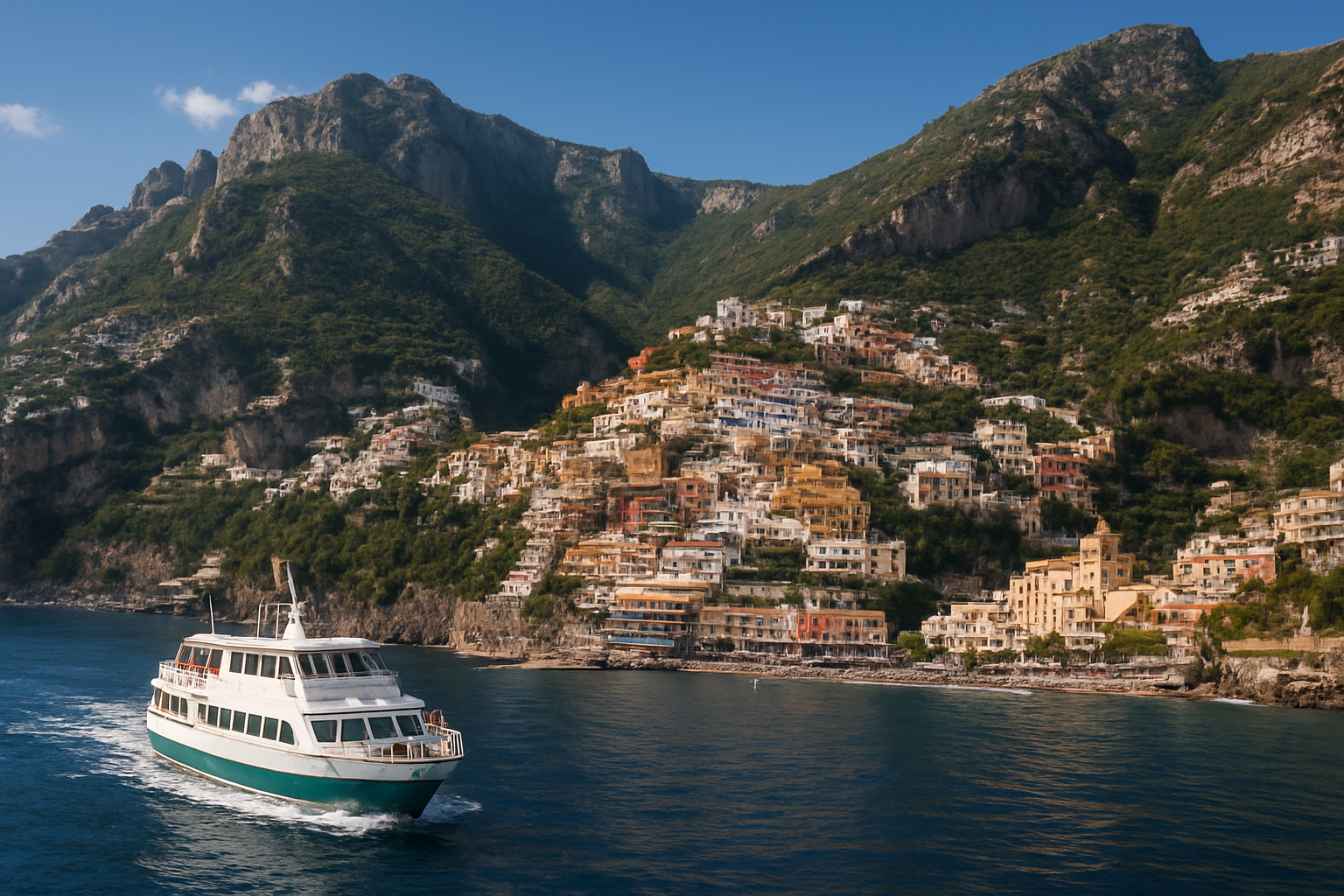
When services are operating, ferries are usually the most comfortable way to travel between the coastal towns. They avoid the narrow, winding SS163 road and provide direct connections between ports such as Salerno, Vietri sul Mare, Cetara, Maiori, Minori, Amalfi, Positano, and Praiano. Travelmar lists these destinations and sells tickets through its official service. ([travelmar.it](https://www.travelmar.it/en/visit-amalfi-coast-by-ferry?utm_source=openai))
When ferries are the better choice
- Traveling from Salerno to Amalfi or Positano.
- Moving between Amalfi and Positano without carrying luggage on a crowded bus.
- Planning a scenic day on the water in spring, summer, or early autumn.
- Returning to Salerno after visiting a western coastal town.
What to check before boarding
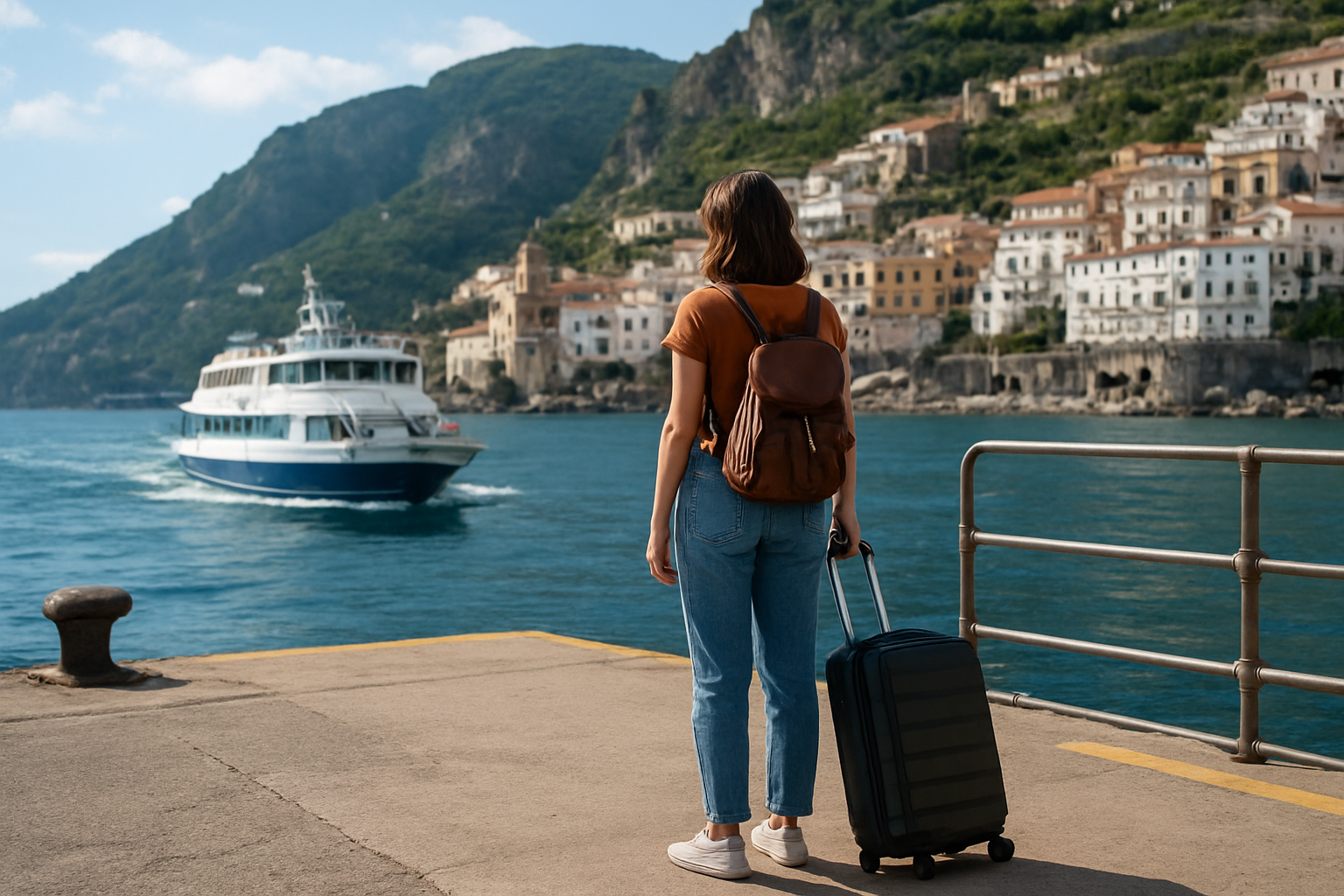
Ferry services can change with weather, sea conditions, holidays, and the season. Check the operator’s timetable on the day before travel and again on the morning of departure. Arrive early if you are traveling with luggage or have a time-sensitive connection.
Do not make a ferry your only option for reaching an airport, train departure, or nonrefundable tour. Keep a bus, taxi, or private transfer alternative in mind when the timing matters.
The official Travelmar information page explains the main ferry routes and arrival options from Salerno, Naples, and Rome. ([travelmar.it](https://www.travelmar.it/en/visit-amalfi-coast-by-ferry?utm_source=openai))
3. Use SITA buses for hillside towns and backup routes
Buses are essential for places that do not have convenient ferry piers. The regional SITA Sud network serves routes along the coast and inland, including connections toward Ravello, Agerola, and other hillside communities. Current schedules are published by SITA Sud and local tourist information offices, with seasonal changes common. ([distrettocostadamalfi.it](https://distrettocostadamalfi.it/praiano-tourist-information-office/?utm_source=openai))
Best bus journeys
- Amalfi to Ravello: the standard choice for visiting the hilltop town.
- Amalfi to Agerola: useful for access to hiking routes such as the Path of the Gods.
- Amalfi to Maiori or Minori: practical when ferries are not running.
- Sorrento to Positano and Amalfi: useful for linking Sorrento with the coast, though traffic can make the journey slow.
Buy tickets before boarding where required. Availability at stops is not always the same as in a major station, so ask your accommodation about nearby authorized sellers or use the official regional ticketing options. Keep small change available, and do not assume every bus stop has a ticket machine.
How to make bus travel less stressful
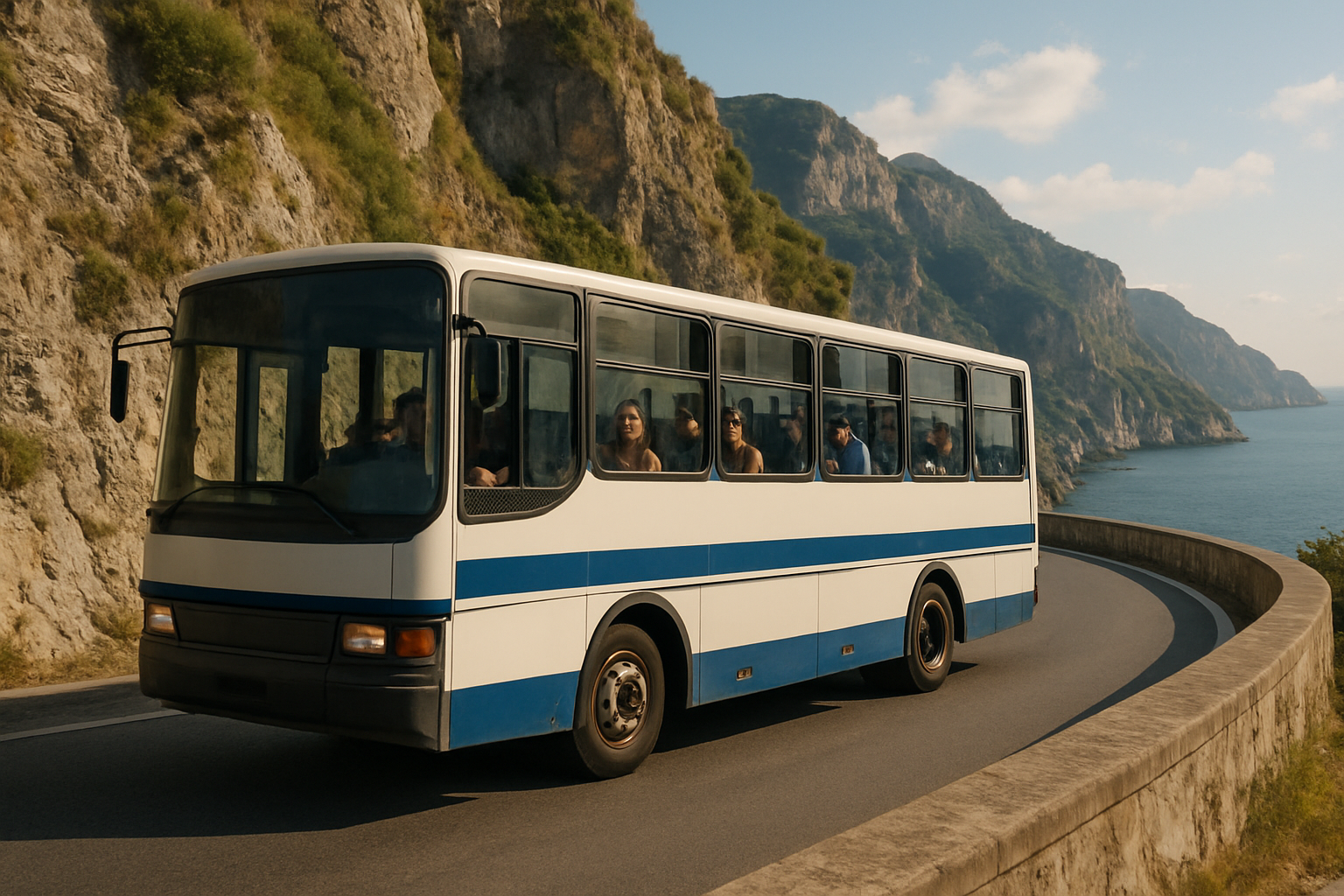
Arrive early at busy stops, especially in Positano and Amalfi. During high season, a bus may arrive full, and you may need to wait for the next one. Stand where the driver can clearly see you, and confirm the destination before boarding.
Leave extra time for traffic. A route that looks short on a map can take much longer when coaches, delivery vehicles, and local traffic share the coastal road.
For the latest seasonal notices, use the SITA Sud coastal timetable page. ([sitasudtrasporti.it](https://sitasudtrasporti.it/campania/avvisi/orari-costiera-sita-sud/?utm_source=openai))
4. Match each destination with the right transport
The best answer to how to get around the Amalfi Coast without a car depends on the specific town. Use this comparison before building your daily itinerary.
Transport comparison for common Amalfi Coast routes:
| Destination or route | What to use | What to look for | Warning sign |
|---|---|---|---|
| Salerno to Amalfi | Ferry or bus | Ferry weather and departure time | Relying on one late ferry for a train connection |
| Amalfi to Positano | Ferry first; bus backup | Port timetable and luggage space | Assuming buses will have empty seats in peak season |
| Amalfi to Ravello | SITA bus or taxi | Return departure times | Staying late without checking the last bus |
| Sorrento to Positano | Seasonal ferry or SITA bus | Direct departures and traffic | Scheduling several activities immediately after arrival |
| Naples to the coast | Train to Salerno or Sorrento, then ferry or bus | Connection time and station transfers | Booking a tight same-day connection |
| Ravello or Agerola hiking access | Bus, taxi, or organized transfer | Early start and return plan | Assuming mobile service or taxis will always be available |
5. Plan your arrival and departure separately
Getting to the coast is often easier than moving around once you arrive. Treat your arrival day and departure day as their own transport plans rather than as ordinary sightseeing days.
From Rome
A fast train to Salerno is often a straightforward starting point. From Salerno station, the waterfront and ferry departure area are within walking distance, although you should allow time for luggage and finding the correct pier. You can then continue by ferry or bus depending on the date and conditions.
From Naples
You can travel by train toward Salerno or Sorrento, then continue by ferry or bus. Sorrento is useful for the western end of the coast, while Salerno usually offers a simpler connection to Amalfi and the eastern towns.
Do not confuse a train to Sorrento with a train directly to the Amalfi Coast. Sorrento is a gateway, not a coastal town on the Amalfi side.
For an airport departure
Leave a generous buffer before your flight. A ferry may be canceled, a bus may be delayed by traffic, and a taxi may need to navigate a difficult pickup location. For an early flight, staying in Naples, Salerno, or another airport-accessible location the night before may be less stressful than attempting an early coastal transfer.
6. Build realistic car-free day trips
The coast is not a place where you need to check off every town in one day. Choose one main destination and one nearby stop, then keep time for meals, viewpoints, swimming, and unplanned delays.
Sample day trip: Amalfi and Ravello
Start in Amalfi, visit the historic center, and take a bus or taxi to Ravello. Return to Amalfi before continuing to Atrani or staying for dinner. This plan avoids crossing the coast repeatedly.
Sample day trip: Positano by ferry
Take a morning ferry from Amalfi or Salerno, spend several hours in Positano, and return by ferry if the timetable works. If you want to visit Praiano as well, check the port sequence carefully rather than assuming every sailing stops everywhere.
Sample day trip: Maiori and Minori
These eastern towns are relatively easy to combine by ferry, bus, or on foot depending on the season and your energy. They are a good alternative when Positano is crowded or ferry tickets are limited.
7. Prepare tickets, luggage, and navigation before leaving
Small preparations make car-free travel much easier. Download or save transport information before you leave your accommodation, because mobile coverage can vary on steep roads and busy waterfronts.
- Save ferry and bus departure times as screenshots.
- Confirm the exact pier or bus stop, not only the town name.
- Carry water, sun protection, and comfortable shoes.
- Use luggage with wheels only if you can manage steps and uneven paving.
- Keep your accommodation address available in Italian for taxi drivers.
- Plan where you will store bags if you are visiting between hotel check-out and check-in.
For travelers who prefer an organized transport approach, a private transfer can be useful for one difficult connection, such as an arrival with large bags or a late departure. It is usually less necessary for ordinary daytime sightseeing between the main towns.
8. Use walking and taxis strategically
Walking is often the fastest way to move within a town once you arrive at the port. Amalfi, Atrani, Minori, and parts of Positano can be explored on foot, but steep stairs and heat can make short distances tiring.
Taxis are most useful for short uphill transfers, late returns, luggage, or places with infrequent buses. Ask about the fare before departing and use a licensed local service where possible. Taxis are not a substitute for planning: in busy periods, vehicles may be limited or delayed.
Common mistakes when traveling without a car
- Trying to visit too many towns: limit most days to one major destination and one nearby stop.
- Using only Google Maps: compare map directions with the transport operator’s current timetable.
- Ignoring the season: ferry routes and frequencies are not identical throughout the year.
- Boarding without a ticket: buy bus tickets in advance when the operator requires it.
- Leaving no connection buffer: allow extra time between a ferry, bus, train, and tour.
- Carrying oversized luggage: steps, crowded buses, and small boats make large bags inconvenient.
- Assuming the last return is late: check the final bus or ferry before starting a day trip.
What if your transport plan fails?
What if the ferry is canceled?
Check the next ferry, then compare it with the SITA bus route. If you have a fixed reservation, contact the accommodation or tour provider promptly. Do not wait until the scheduled departure time if the sea conditions already look poor.
What if the bus is full?
Wait for the next service, travel to a larger nearby stop, or ask your hotel about a local taxi. During peak periods, starting earlier is often more effective than trying to find a less crowded midday bus.
What if you miss the last connection?
Contact your accommodation before making alternative arrangements. A taxi may be possible, but availability and cost can vary significantly. Avoid walking along the main coastal road at night, particularly where there are narrow shoulders or limited lighting.
Advanced tips for a smoother Amalfi Coast trip
- Use a split stay: spend part of the trip in Salerno or Amalfi and part in Sorrento if you want to explore both sides.
- Book accommodation within practical walking distance of a port or central bus stop, not only near a viewpoint.
- Schedule popular ferry journeys early in the day, leaving the afternoon flexible.
- For the Path of the Gods, arrange the return route before beginning the hike.
- Ask your hotel whether its road location is reachable without a long uphill walk from the nearest stop.
- Check official updates shortly before travel. Local coastal schedules can change after the timetable printed in a guidebook.
Car-free Amalfi Coast checklist
- Choose a base with a nearby ferry pier, bus stop, or train connection.
- Check ferry availability for every planned coastal crossing.
- Save the current SITA Sud timetable and ticket information.
- Identify your return connection before leaving for the day.
- Allow extra time for traffic, queues, and walking between stops.
- Keep a backup plan for bad weather and missed departures.
- Pack light enough to handle stairs, buses, and boats.
- Do not use a bus or ferry as the only plan for catching a flight.
Next actions before you book
- Mark the towns you most want to visit: for example, Amalfi, Positano, Ravello, and Maiori.
- Choose the town that gives you the simplest combination of transport and accommodation.
- Check ferry routes for your travel dates and identify bus alternatives.
- Plan your arrival and departure separately from your sightseeing days.
- Reserve only time-sensitive activities after confirming that the transport connections are realistic.
If you enjoy comparing destinations before committing, browse the Aweektrip homepage, or compare other travel styles through our guides to European autumn destinations and a one-week Istanbul itinerary.
Frequently asked questions
Is it easy to visit the Amalfi Coast without a car?
Yes, particularly if you stay near Amalfi, Salerno, or Sorrento and accept that journeys may take longer than the map suggests. Ferries, buses, trains, walking, and occasional taxis provide a workable combination.
Is the ferry better than the bus on the Amalfi Coast?
For main coastal towns, the ferry is often more comfortable and less affected by road traffic. The bus remains essential for Ravello, Agerola, Praiano, and periods when ferries are unavailable.
Should I stay in Positano without a car?
You can, but confirm that your accommodation is close enough to a practical bus stop or port. Positano is steep, and reaching a hotel with luggage may involve stairs or a taxi even when the address appears central.
Can I visit the Amalfi Coast as a day trip from Naples?
It is possible, but the day can become long because you need to combine a train with a ferry or bus. Staying overnight gives you more flexibility and reduces the risk of missing a return connection.
What is the best transport for luggage?
A ferry is usually easier than a crowded bus when traveling between coastal ports. For a difficult hotel transfer, a prearranged taxi or private transfer may be worthwhile, especially with large bags.
The best way to get around the Amalfi Coast without a car is not to rely on one transport system. Use ferries for scenic coastal links, buses for hill towns and backup routes, trains for the wider region, and walking for short local journeys. With a central base and realistic buffers, you can enjoy the coast without taking on its narrow roads yourself.